Three good books not for bedtime.

station-eleven_612x380_31I’m binge eating disaster lately. I mean, in my reading habits (but probably elsewhere, too). The past three books I’ve read have been about the apocalypse and I enjoyed them all. But not all horrors are not created equal, so in order:

  1. Station Eleven by Emily St. John Mandel // I cry frequently when reading. It’s kind of embarrassing. But I think a good book is one that makes me laugh, loud and rude. A good book is one that makes me choke a little on myself, happy to be so sad. Station Eleven did both. It’s the story of a traveling theater troupe performing Shakespeare for rustic villagers twentysome years after the world has ended from a nasty avian flu. This may be the nerdiest book I’ve ever read. The performers motto is from Star Trek: “Survival is insufficient” and the entire book traces mad circles around King Lear (my favorite) and falcons cannot hear the falconers and every other sentence contains a reference and somehow, it all works brilliantly.
  2. The Girl With All The Gifts by M.R. Cary // Sometimes, I have a hard time parsing how good or whatever a book is because I just read it too fast. That’s the case here. I read The Girl With All The Gifts today and I freaking loved every moment. Set in dystopian future England, it’s the story of a zombie girl genius who has no idea she’s a “hungry,” as they call it. The book’s title is a translation of the name Pandora and flesh-starved Melanie is the metaphoric gifted girl, whose real gift I can’t say because of spoiler alerts. I can’t decide if this should have been the first one on the list or if I’m still living in it a little, but damn, was it good.
  3. Odds Against Tomorrow by Nathaniel Rich // A recommendation from a friend brought me this strange book and once I started it, I couldn’t put it down. This should be the lynchpin in this list, the one that solidifies the trend: literary, obsessively referential, cynical and politically-affected post-apocalyptic tales published in the last year. Odds Against Tomorrow is about a finance jackass who’s a little less jackass-y than his coworkers but far more brilliant. He is also clearly suffering from very, very bad anxiety (which I suppose is supposed to be his tragic flaw?). But I ended up just really, really wanting him to get a therapist. Lame way to end a novel, but still.

What a lazy, biased series of quasi-reviews of really great books. Whatever, I’m not a critic. Five stars for all.
Sweet science: deer beds.

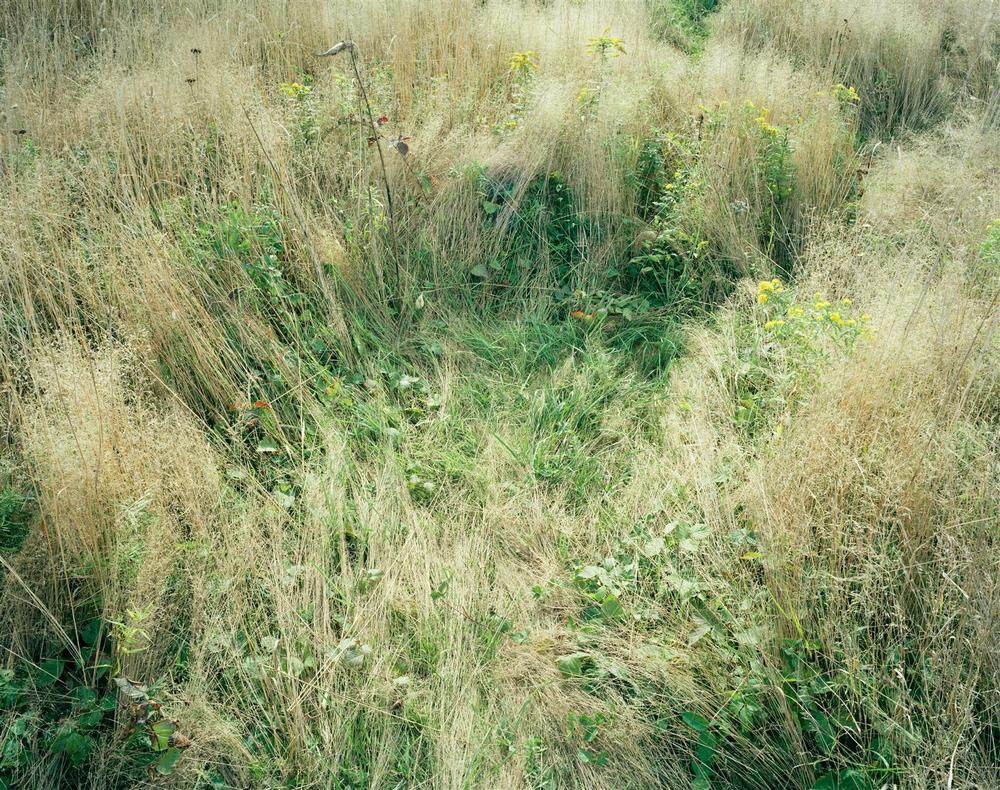
Katherine_Wolkoff_DeerbedHere is something I learned today: Deer beds are beautiful.

Here’s another thing: Deer travel and live in herds. They’re social animals—to an extent. While the bucks are off… doing whatever it is bucks do, the lady-deers come together. The female deers and their little dappled fawns bed down together in large groups, while the bucks only hang out in groups of three to five (they are constantly fighting for dominance, which weakens the herd dynamic, kind of like when you go out with a few guys and they start playing darts and the night quickly dissolves into puffed chests and hurt feelings).

Hunters often track deer based on the imprints they leave when they lie down to rest. They create oval-shaped indents on the ground, crumpled swirls of grass. In the winter, their body heat melts the snow beneath, so if you see a few round melty spots, that’s probably a deer bed. Katherine_Wolkoff_deerbed_2

Photographer Katherine Wolkoff has created a series called “Deer Beds,” and I’m absolutely in love. To capture these images, she followed deer around Block Island, stopping where they did and training her camera on their nocturnal nests. The photographs (above) are strangely intimate and human. Touching and wild. Sweet and subtle. Imagine stumbling on a one of these deer beds in the wild grass. Lie down, it’s still warm from their gentle heat. Smell the plants, prickly and pungent, green and growing. Go to sleep. Dream of the herd, prancing away without you. Oh, deer.

A funny little squirrel.

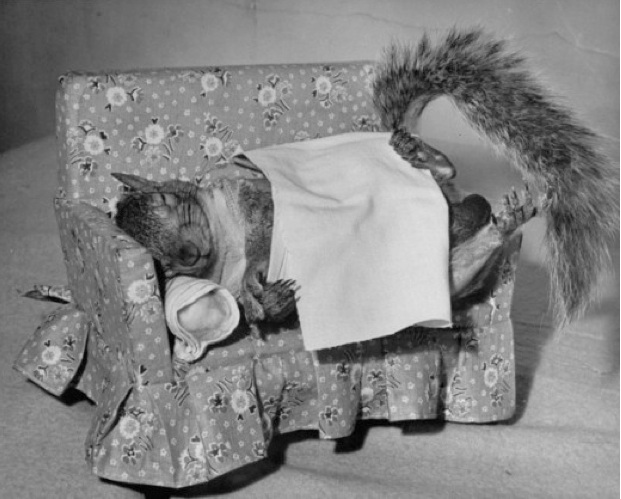
squirrel_tommyThis silly little guy is Tommy Tucker. In the 1940’s, he became mildly famous when LIFE magazine photographer Nina Leen decided to turn her lens on Tommy. His owner made him some sharp new outfits (all dresses, because, I have to assume, squirrels hate pants as much as I do) and a rodent star was born.

Hyperallergic has the full, creepy-cute story.

How to be happy, according to a French philosopher.

protea

It’s difficult to get what you want. Even if we desire something, most of the time we don’t take the right steps to get it — that’s the problem with pleasure. We want to be happy, but we prefer pleasure. But pleasure and happiness are quite different. There is no happiness without pleasure, but if you want to be happy, in a deep way, you have to choose not to search for short pleasures, but to make the effort required for greater pleasure, which is where real happiness lies.

A good reminder that being happy is hard work, coming from the author of Happiness: A Philosopher’s Guide. (The book is a bestseller in France but was only recently translated into English. Here it is on Amazon.)

A good death is hard to find.

momento mori soapsMemento mori is a Latin term that means “remember that you must die” and apparently, that’s what inspired a California artist who goes by Eden to create these beautiful soaps. Her project, which was launched on Kickstarter, has been fully funded though she’s still accepting orders. Embrace your mortality while cleansing yourself of all earthly sins! Bathe in the knowledge that death comes for us all! (And when it does come, do try to have a good death, yeah?)

As anyone who reads this blog probably knows, morbid-pretty is my favorite kind of pretty. Poe once wrote that “there is no exquisite beauty… without some strangeness in the proportion” and I just love that. Strangeness in the proportion. Ugly-beauty. Morbid-pretty. It does feel like this is becoming zeitgeist-y as of late, with lots of female morticians speaking out on Twitter and lots of trendy blogs posting about Goth-y topics. But I think I like that (as much as I ever like it when my pet subjects grow larger than me). Let’s all embrace the strangeness of our proportions and plan our funerals and hold hands with our deaths and dance until we all fall down.

Things that make me happy: Japanese string gardens, Dylan Thomas & a song for Spring.

hanging string gardens japan1. In Tokyo, the “experience designers” at teamLab have created a beautiful, kinetic hanging garden made with a form of bonsai called Kokedama. Tied with string and bound with moss, the plants are able to grow mid-air, roots burrowing into little contained bundles of dirt. And because art and science are just natural bedfellows: This floating field is also mechanized to move with your body, parting the way for views to walk amongst the blossoms unhindered. What a lovely, happy thing to create. It reminds me of another untranslatable word I’ve been digging: Shinrin-yokuTranslated literally it means forest-bathing, but it’s often used to refer to a short, rejuvenating walk in the woods. Nice, right?

2. One of my all-time favorite poems is “Fern Hill” by Dylan Thomas. Just go read it to see why. This is one of those poems where all the parts are the best part, but here is a sample:

Now as I was young and easy under the apple boughs
About the lilting house and happy as the grass was green,
     The night above the dingle starry,
          Time let me hail and climb
     Golden in the heydays of his eyes,
And honoured among wagons I was prince of the apple towns
And once below a time I lordly had the trees and leaves
          Trail with daisies and barley
     Down the rivers of the windfall light.

3. A perfect song for warmer weather!

Social media mysticism & let’s say a big welcome to spring, dirty though she may be.

Black tailed jack rabbitFour days late: Rabbit, rabbit, rabbit.

Did you know that the tradition of saying “rabbit rabbit” on the first of the month (or in the UK, “white rabbit” or even “bunny, bunny”) is a relatively new bit of folkloric superstition? This odd habit first appeared in the early 1900’s (FDR was a rabbit-rabbit devotee and reportedly uttered the silly phrase on the first of the month without fail). No one really knows where it came from or why the magic words vary from place to place. Most people think it has something to do with the tradition of carrying a dead rabbit’s foot on a keychain—another thing FDR was known to do. I suspect that the tradition is becoming even more widespread in the age of Facebook and Twitter, where everyone can digitally rabbit rabbit for good luck. Or just to show that you’re well versed in social media mysticism. (This is either the best kind of hoodoo or the very worst. I don’t really know.)

In America, rabbit-ing is a New England thing, and I rather like that. New Englanders always seem like such skeptical, cold folk. It’s nice to know that we’re also pulled toward the rabbit hole of nonsense (because if there is anything truly magical, that’s where it hides: in plain sight under piles of nonsense).

But I suppose I am thankful that it’s finally spring. The ground has turned to mud. Everything is coated in grime. Portland is a city of dirt and muck. Even the whitest of rabbits would turn hare-brown here. Wild, like a Dürer.

How writing is like catching fish & what Rilke said.

Illustration by Elisa Ancori

Things aren’t all so tangible and sayable as people would usually have us believe; most experiences are unsayable, they happen in a space that no word has ever entered, and more unsayable than all other things are works of art, those mysterious existences, whose life endures beside our own small, transitory life. – Rainer Maria Rilke

I caught a fish with my hands once. It was swimming upstream to spawn in the thaw of spring, which in Maine means mid-May (we don’t have a pretty, dappled ascent into summer, just a mess of thawing ice and a long, painful mud-season that only plays at warmth). Every now and then, a trout would fly out of the river as it tried to make its way up the waterfall, a little flash of black and silver in the air, improbable as a proverb.

I was with a park ranger, and he told me to try and catch one. I waded out into the water across slippery stones. It was so, so cold against my bare feet and ankles. It took a few tries to catch a fish. I would see it coming, watch downstream as it approached, and plunge my hands into the water, groping blindly in the bubbles and blackness. I felt so many fish swim deftly between, around, over my hands. In the end, I crouched down with my numb hands motionless in the water, ready for the trout to come to me. Eventually, one did.

I held it over my head and my friend on the riverbank took a picture. I remember feeling so powerful, as though I had accomplished something far bigger than grabbing a dumb creature out of a river. Then I set the fish back into the water and let it continue its upstream swim, struggling against the current, driven by instinct and desire, rushing toward its chance to mate.

I’m writing this because I can’t write anything else right now. I am smothered by winter and anxiety. And when I read that Rilke quote, all I could think of was that fish. Experience is as slippery and elusive as a fish, evading all attempts to pin it down with language, though that is the job of the writer, isn’t it? To catch the fish. To say something real with the clumsy, numb tools we have.

Spring’s thaw can’t come soon enough.

Above quote by Rilke, image by Barcelona-based artist Elisa Ancori

Two nice things: Celeste Keller painting & Mary Oliver poem.

Screen Shot 2015-03-15 at 10.17.29 PMMysteries, Yes

Truly, we live with mysteries too marvelous
to be understood.

How grass can be nourishing in the
mouths of the lambs.
How rivers and stones are forever
in allegiance with gravity,
while we ourselves dream of rising.

How two hands touch and the bonds
will never be broken.
How people come, from delight or the
scars of damage,
to the comfort of a poem.

Let me keep my distance, always, from those
who think they have the answers.

Let me keep company always with those who say
“Look!” and laugh in astonishment,
and bow their heads.

– Mary Oliver

I am tired and sick, so nothing more to say today, except this: Mary Oliver is the most comforting and uplifting poet. Besides Yeats, who I adore, she might be my favorite.

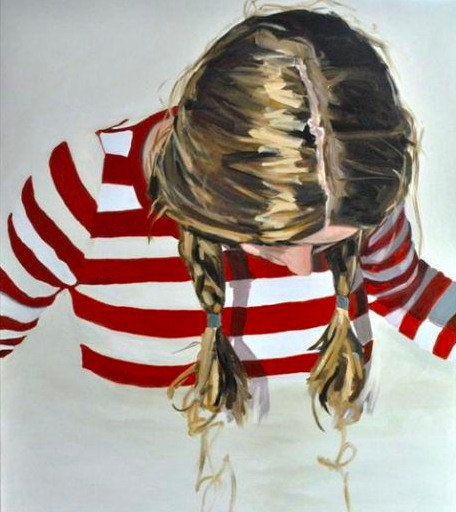
Painting by Celeste Keller, who does lovely portraits. 

Why I read, why I write: Kurt Vonnegut edition.

ann teresa barboza embroidery artist

Write to please just one person. If you open a window and make love to the world, so to speak, your story will get pneumonia.

Kurt Vonnegut is such a boss. Here are his eight tips of writing short stories, a list that includes “be a sadist” and “every character should want something.” But the above quote is my favorite. Write to please one person. When I’m teaching writing to kids, I call this their “dream reader” or “fantasy reader.” Who is a person who you admire, who you most want to read your work? When I write, I think about a professor I studied with at Bard. I write for him, because writing for everyone is exhausting and impossible. A fools errand, just like trying to be liked by every person at the party.

Image by Ana Teresa Barboza, who creates amazing embroideries of plants and bodies and other natural things. Check out her website here.