 From an NPR piece on Brazilian music, a beautiful word that has no direct translation in English:
Perhaps my favorite of these elusive words is saudade, a Portuguese and Galician term that is a common fixture in the literature and music of Brazil, Portugal, Cape Verde and beyond. The concept has many definitions, including a melancholy nostalgia for something that perhaps has not even happened. It often carries an assurance that this thing you feel nostalgic for will never happen again. My favorite definition of saudade is by Portuguese writer Manuel de Melo: “a pleasure you suffer, an ailment you enjoy.”
This is the perfect word for when a sad song gives you goosebumps and makes your throat ache but you still play it on repeat. It’s also the perfect word for so many artistic experiences, so many encounters with art and literature.
But is it bad to suffer a pleasure? The word saudade reminds me of the problem of sentimentally, particularly Leslie Jamison’s defense of the term She grapples with the pleasure of sentimentality, with the dangers of feeling something too acutely or performing that feeling with too much flair. The New Yorker thinks the pangs of pathos that come from reading a sad story are fundamentally lazy. In an article about Humans of New York, the venerated magazine argues that storytelling has lost its teeth and become something less savage, more concerned with egos and sentimentality and branding than ripping away the veil:
In this way, [Humans of New York] joins organizations like ted and the Moth at the vanguard of a slow but certain lexical refashioning. Once an arrangement of events, real or invented, organized with the intent of placing a dagger—artistic, intellectual, moral—between the ribs of a listener or reader, a story has lately become a glossier, less thrilling thing: a burst of pathos, a revelation without a veil to pull away. “Storytelling,” in this parlance, is best employed in the service of illuminating business principles, or selling tickets to non-profit galas, or winning contests.
I agree that stories can be daggers, or as Kafka puts it, axes to hack away at the frozen sea inside. But I also agree with Jamison and de Melo—some ailments are too sweet not to enjoy. Some pains are pleasurable.
And I’ll take my pleasure where I can get it. I am lazy and I am very, very susceptible to saudade.
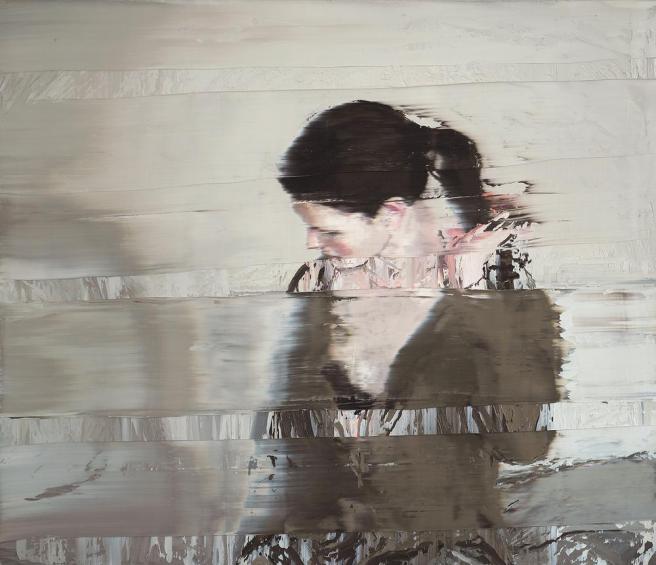
Image by Andy Denzler. See more of his glitchy paintings here.
 About ten years ago, I purchased a small white foldable hairbrush from a Muji store. It was at an airport, either in New York or Boston, but I don’t remember exactly where I was, nor do I remember where I was going. I do remember picking it out of a bin of brushes, all exactly the same, all wrapped in crinkly clear plastic, and deciding that it was something I should own.
 A Tokyo-based architecture firm designed this cluster of pods to serve as a retirement home for elderly Japanese women.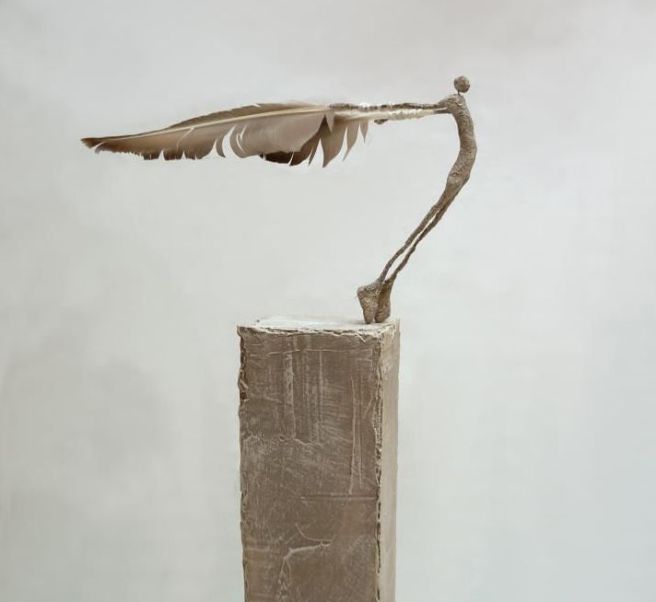
 Here’s a statistic that should make your blood boil: on average, only 5% of the pieces in permanent collections of museums around the globe were created by women. 95% of the art that has been purchased by museums—the very institutions that safeguard our culture—was created by men.
  While on assignment in Spain, photographer Julia Werner found a starving dog blonde dog. She fed the skinny little guy and rescued him. She loved his big spirit, and so she made him a mane to match. Then they went out exploring Hapsburg. The resulting
  Emma Cline’s debut novel got a seven figure book deal
 The shooting in Orlando breaks my heart. The malignant violence (and anger and hatred and homophobia) in American culture scares me more than I like to admit.
 I love these monsters and I love love Marina Muun’s color palate. I’m really into unexpected pastels lately, mauve-y pinks and gray-greens.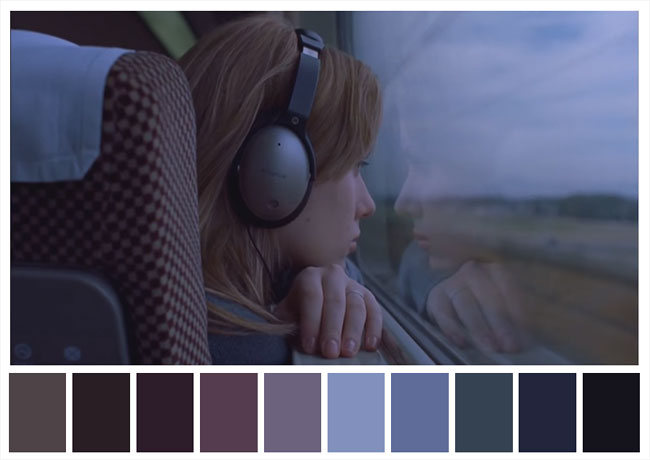
 I once read that the most expensive paint colors were also the most difficult to describe. We can all picture buttercup yellow, but can you imagine a sandy mixture of yellow with hints of pink and gray? Or that pretty, silvery green color that so often appears on spring things, like lambs ear or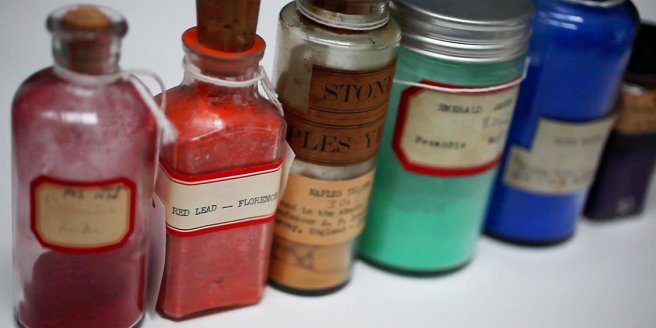
 Katy Kelleher