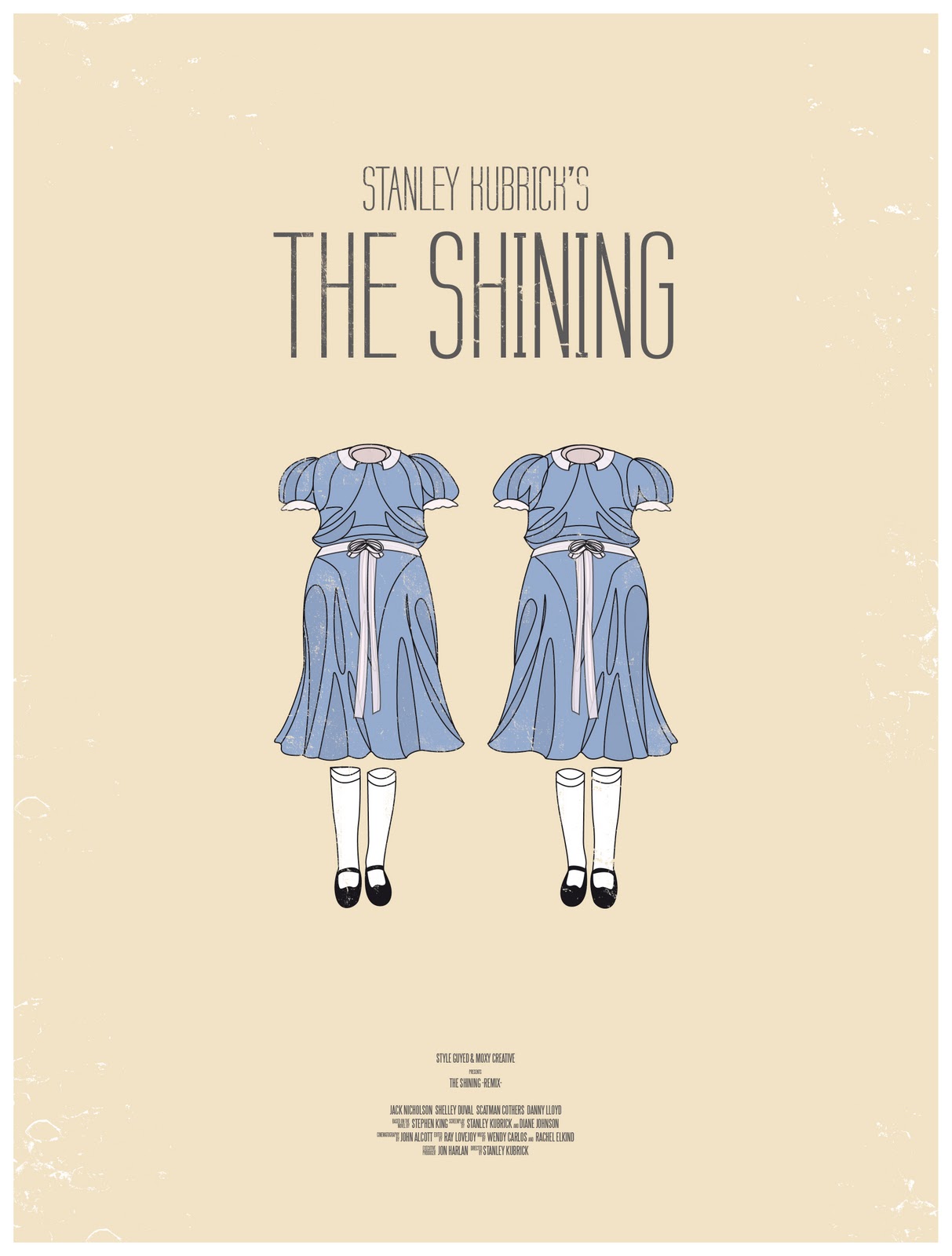
 Amazingly cool redesigned movie posters, available for $30. I want this one, but I have a feeling I’ll be buying the ‘Anchorman’ poster for one of the many dudes in my life.
Author: Katy Kelleher
Things I Read This Week
 Yesterday, there was nothing for me to do at work. I had already trimmed my nails with one of the many X-acto knives that inexplicably cover my desk. I had also already marked everything within reach with the red “CONFIDENTIAL” stamp I found in a desk drawer. I had finished checking company Facebook pages and finished my “social media outreach” for the day (this is actually a part of my job, not further evidence of my slacking). After I finished all this, I decided to check out one of the upcoming titles, and so I read The Diviner’s Tale, cover-to-cover.
I chose this book, out of all the many free books that hang around the office, because it was written by a familiar figure. Bradford Morrow is a professor at Bard College, and while I never took a single class with him, I was made aware of his existence by various writerly peers (though I have been employed for over two years as a writer, I never considered myself a writer, especially not in college, where I was not nearly confident enough or creative enough to claim that name). Perhaps because I tended to think of Bard as the last bastion of bohemian high-minded snobbery, I didn’t expect Morrow’s book to be so riveting. I expected complicated prose and philosophical musings, not a vaguely trashy mystery. Which is exactly what it is (and exactly what I wanted to read while waiting for 5 to roll around).
Here’s the basic premise: Cassandra, named such because she’s a prophet, natch, is a diviner, meaning she goes around finding water and seeing the future. Her brother disappeared when she was a kid, and her family has never really been the same. Spoiler alert: though Morrow never uses the word, Cass was raped when she was a kid, which casts a weird, threatening cloud of sexual violence over the entire narrative that is only half-way acknowledged. She goes into the woods one day, near where the “assault” occurs, and sees a vision of a dead girl hanging from a tree. Soon after, a lost teenager emerges from the woods, who has also, we are to assume, been the victim of sexual violence. It’s pretty creepy, and more than once, I found myself curling into a little ball in my office chair, as though to protect my organs from whatever passage I was currently reading. Which is to say: My body language says it’s good, so it must be.
However, it did remind me a lot of the book Generation Loss by Elizabeth Hand. There are quite a few easy similarities (both feature damaged narrators named Cassandra, both include trips to Maine, both are sort of modern magical realism, both have a sick psycho killer hiding in the woods) but I think The Diviner’s Tale was creepier. But I would recommend either novel.
Book Review: Savage Lands by Clare Clark
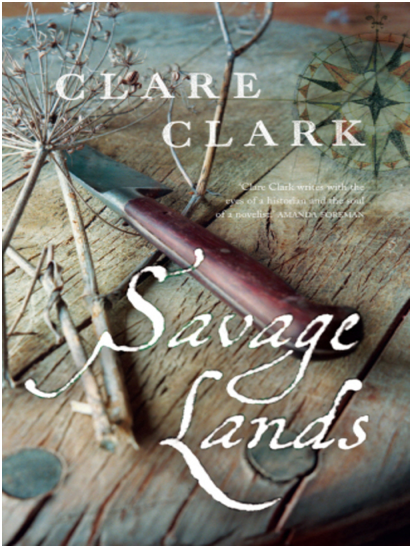 As previously mentioned, I recently read the novel Savage Lands by Clare Clark. I picked up Savage Lands when I was bored at work, and I didn’t put it down until the last page (practically. In reality, I did take a break to walk home and another break to take a shower, but you get the idea).
Even though I read it at a somewhat feverish pace, it’s not really a page-turner per se. Savage Lands is about two different “casket girls” who arrive in colonial Louisiana to two very different fates. The name “casket girl” refers to women shipped over from France to marry in the New World. Apparently, they got their name from the trunks (or caskets) they carried, which is not nearly as sinister as I had hoped.
Anyway, the first casket girl is a feisty bookworm named Elizabeth. She comes across as kind of a jerk – she’s a little snotty and difficult to be a true heroine – but as the book progresses, she becomes more likable. Except for one thing: she is hopelessly devoted to her handsome, charismatic, ambitious, greedy, and straight-up asshole husband.
One day, said husband brings home a stray by the name of Auguste, who had been living with the “savages.” Auguste falls in love with Elizabeth, and the three of them become this strange love triangle that feels a bit like a family and a bit like a menage-a-trois. In the interest of not giving anything away, I’ll just say this: there’s betrayal! Romance! Violence! and a lot of mud.
The second casket girl arrives years later. She has an eating disorder, but other than that, she’s kind of boring. Her entire section is far less interesting than the space devoted to Elizabeth and Auguste. But that can’t be helped.
To be perfectly honest, this book isn’t so much plot-driven as it is description-driven. There is a lot of settler porn (a phrase I hope I just made up). You know, lengthy descriptions of the newly erected towns, discussions of what they ate, details of the native/colonist relations. That type of stuff. Quite fun if you’re interested in American history, though admittedly less so if you’re bored by long passages describing much and mire. There is sort of an Edward Taylor-feel to some of the language, which I quite enjoyed. Like Taylor, Clark seems to revel in the dirt; at times, I even suspected that she must genuinely enjoy describing suffering. She certainly spends a lot of time dwelling on it.
Overall, I recommend Savage Lands and I’m looking forward to checking out some of Clark’s earlier books, one of which is about sewers (or something) and is called The Great Stink, which sounds promising.

More cool circus stuff: Mike Shine’s Flotsam’s Wonder World.
Water for Elephants by Sara Gruen
 I’ve recently re-discovered my love for historical fiction.
Part of this has to do with my internship. The biggest perk of working at a publishing house is the free books. Sometimes I get galley copies, sometimes I get actual, real, published books. A week ago, I read Savage Lands by Clare Clark, which I will post about soon.
However, today I want to write about Water for Elephants. I had only heard good things about this book, but until I saw it in a friend’s bookshelf, I never really bothered to look at it. I think I was put off by some remnants of lit major snobbery–you know, it’s not a good book unless the author has been dead for 50 years, or it’s about suffering, or it’s written by an old white dude.
Yes, yes. I realize how wrong this all is. But I occasionally still feel pangs of guilt that come with pleasure reading (college may have messed me up). And Water for Elephants really is pleasurable reading. It’s fun and fast and exotic and sensual and fun.
It’s also well-written.
Anyway, here is the basic premise: A 93-year-old man stews quietly in a nursing home. His mind is slowly slipping away, until the arrival of a circus awakens something long dormant. Switching back and forth between the 1930s and present day, we learn how Jacob ran away from Cornell veterinary school to join the circus after being orphaned only to meet a cruel, hateful equestrian trainer and his glittering, glamorous wife. There is love, death, violence, sex, and more than enough squalor.
I don’t know if this really counts as historical fiction, but I fell in love with Gruen’s depiction of 1930s America. I also happen to be fascinated with freak shows and the cult of the supernatural that arose during that era, so Water for Elephants sated all sorts of cravings I didn’t know I had. Plus, it helped start up a conversation on the train–another 20-something girl had just started reading it when she noticed me mid-way through–which is always a pleasant surprise.
Finding beautiful things amid squalor is has become a survival skill of sorts for me; as someone used to open spaces and clear night skies, it’s pretty much necessary that I figure out ways to see the aesthetic aspect of urban life. Here’s a good slide show example (though a little more rough than I usually tend): Beauty Amid Ugliness.
 Katy Kelleher