You Think It’s Like This But Really It’s Like This

I once had a teacher in college who told me I had an uncanny talent putting things together that seemed to have no business going together. Seeing patterns when they probably weren’t there (but once you see them, they kind of are. Funny thing, that).
I’ve been doing it a lot lately in my personal life—layering situation on top of situation and trying to make myself see some sort of central theme. The end result is probably just clouded vision, but I can’t tell yet.

On a slightly less vague note, research for work has lead me in some really interesting directions lately. Here’s a particularly cool thing: Bioluminescence in the Gippsland Lakes.

Continue reading

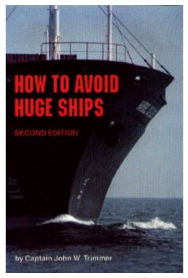
I know this is kind of old, but I just saw it today: How To Avoid Huge Ships (or, as I am calling it now, the best and most useful self-help book that has ever been written by man or beast). I’ve just read ALL the Amazon reviews and they are killing me. I’ve spent the past half hour sitting on my floor cracking up manically. The best.
Okay, now that I’ve gotten that out of my system, I can go back to posting tiny things and treehouses.

I’ve been listening to a lot of This American Life lately (Sara turned me on to it and it is the perfect thing to listen to while knitting, which I think makes me about 30,000 years old, but I digress) and the other day I heard a particularly awesome episode titled “Frenemies.” Though the whole show was great, the best part was contributor David Rakoff’s poem about an uncomfortable wedding toast. In it, a man named Nathan is invited to the wedding of his exgirlfriend and his former best friend, who (inexplicably) asked him to give a toast. It’s funny and touching and clever and cute. But the best part is at the end—it’s a surprisingly philosophical way of looking at wounds and anger and forgiveness (complete with some brilliant rhymes). Seriously, go listen to it—or read it, since I found the text and decided to post it here (after the jump! as they say)…

Continue reading

Cutters.

In the past few weeks, I’ve bought more books than I’ve probably purchased in the years since graduating college. Seriously, I don’t know what happened. One morning, I woke up an remembered that I love owning tons and tons of beautiful books and pow, now I have dozens of unread paperbacks sitting around on top of several very weighty art books that I haven’t had time to touch. But I will! Especially the giant, expensive and very, very beautiful book I bought on the history of Art Nouveau. Must write this is my nonexistant to-do list (must make to-do list…) stop spending money, read the books you already have already. Maybe if I wrote it 100 times it would help?

Probably not, because I just ordered yet another art book. However, I think that Paper Cutting: Contemporary Artists, Timeless Craft will most defiantly be very inspiring and helpful in my quest to become inspired and start making more stationary. I recently helped Miss Boston make about 9,000,000 thank-you-notes, a task that almost drove me to commit hari kari with my crafting scissors. And left my hands filled with many little cuts from the X-acto knife that have been torturing me in the most unpleasant way (minorly, but with great vigor).

On an unrelated note, searching for the above image lead me to discover the publisher’s blog, which I really like. From the brief time I spent interning at HMH, I know that more and more publishers are trying to get in on the social media scene, with really mixed results. The people at Workman are funny, but a bit random. The Chronicle blog stands out because of their gorgeous pictures. HMH has some good Tumblrs—I particularly like their Literature in Translation one—but sometimes they can be a tiny bit boring. Though I haven’t hit on any that I plan on checking daily, it seems like this could be a cool place to get interesting tidbits of information to throw around when you’re drunk (especially if you’re drunk at a literary party). Do libraries have blogs? I would also like to read that. Not enough to do a Google search, obviously, but if there is a great library Tumblr out there, I hope it comes to me.

Things I Read That I Liked

zadiesmithThe other day, I read On Beauty, which is a book I’ve had for a long time but never really bothered to read. I know I’m exceptionally late to the party here, but I feel the need to say that it was really quite good. It’s exactly the kind of book that makes me simultaneously want to open up my laptop and start writing a novel, and despair that I will never, ever, no matter how much I write or how hard I work, be that good. But also, it’s really lovely and worth reading.

Zadie Smith’s story of academia and infidelity also reminded me of another book I read recently that I loved: Lit, by Mary Karr. Also set in Cambridge and also about the perils of too much thinking, it differed from Beauty in that it was a memoir of Karr’s days as an alcoholic. Though I could probably write a (really awful) book called Alcoholics I Have Known, none of my boozers ever quite entered into Karr-territory (save for one, but I don’t want to think about that too hard). Lit resides in that scary, almost mythical land of delirium tremors and detox, which actually sounds more depressing than it is. Like Smith, Karr is a terrifically gorgeous writer made all the more enviable by the fact that she’s funny, too.

So those are my Massachusetts-themed book recommendations. I will need to find another one to read soon, since I’m going to be spending the weekend out in the Berkshires looking at treehouses. Yes!

Joan knows best.

To assign unanswered letters their proper weight, to free us from the expectations of others, to give us back to ourselves – there lies the great, the singular power of self-respect. Without it, one eventually discovers the final turn of the screw: one runs away to find oneself, and finds no one at home.

Joan Didion, On Self Respect

Though I don’t normally want to hang out with (to borrow from Stieg Larsson) men who hate women, in Hemingway’s case A. It’s debatable and B. It’s Hemingway!

Here’s a picture of Hemingway (refuse to call him Papa) boozing it up. And here are some of his drink recipes. Very cool & via awesome photography site Codex xcix

Things I Read This Week

Yesterday, there was nothing for me to do at work. I had already trimmed my nails with one of the many X-acto knives that inexplicably cover my desk. I had also already marked everything within reach with the red “CONFIDENTIAL” stamp I found in a desk drawer. I had finished checking company Facebook pages and finished my “social media outreach” for the day (this is actually a part of my job, not further evidence of my slacking). After I finished all this, I decided to check out one of the upcoming titles, and so I read The Diviner’s Tale, cover-to-cover.

I chose this book, out of all the many free books that hang around the office, because it was written by a familiar figure. Bradford Morrow is a professor at Bard College, and while I never took a single class with him, I was made aware of his existence by various writerly peers (though I have been employed for over two years as a writer, I never considered myself a writer, especially not in college, where I was not nearly confident enough or creative enough to claim that name). Perhaps because I tended to think of Bard as the last bastion of bohemian high-minded snobbery, I didn’t expect Morrow’s book to be so riveting. I expected complicated prose and philosophical musings, not a vaguely trashy mystery. Which is exactly what it is (and exactly what I wanted to read while waiting for 5 to roll around).

Here’s the basic premise: Cassandra, named such because she’s a prophet, natch, is a diviner, meaning she goes around finding water and seeing the future. Her brother disappeared when she was a kid, and her family has never really been the same. Spoiler alert: though Morrow never uses the word, Cass was raped when she was a kid, which casts a weird, threatening cloud of sexual violence over the entire narrative that is only half-way acknowledged. She goes into the woods one day, near where the “assault” occurs, and sees a vision of a dead girl hanging from a tree. Soon after, a lost teenager emerges from the woods, who has also, we are to assume, been the victim of sexual violence. It’s pretty creepy, and more than once, I found myself curling into a little ball in my office chair, as though to protect my organs from whatever passage I was currently reading. Which is to say: My body language says it’s good, so it must be.

However, it did remind me a lot of the book Generation Loss by Elizabeth Hand. There are quite a few easy similarities (both feature damaged narrators named Cassandra, both include trips to Maine, both are sort of modern magical realism, both have a sick psycho killer hiding in the woods) but I think The Diviner’s Tale was creepier. But I would recommend either novel.

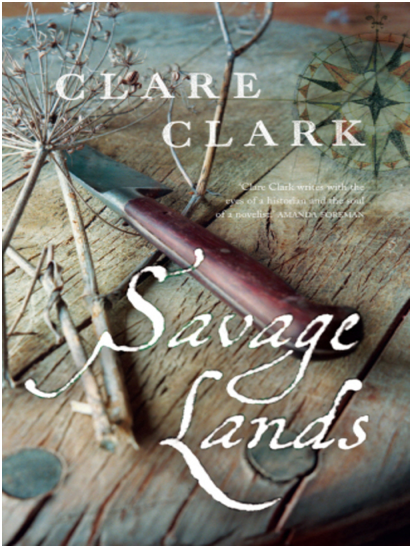
Book Review: Savage Lands by Clare Clark

As previously mentioned, I recently read the novel Savage Lands by Clare Clark. I picked up Savage Lands when I was bored at work, and I didn’t put it down until the last page (practically. In reality, I did take a break to walk home and another break to take a shower, but you get the idea).

Even though I read it at a somewhat feverish pace, it’s not really a page-turner per se. Savage Lands is about two different “casket girls” who arrive in colonial Louisiana to two very different fates. The name “casket girl” refers to women shipped over from France to marry in the New World. Apparently, they got their name from the trunks (or caskets) they carried, which is not nearly as sinister as I had hoped.

Anyway, the first casket girl is a feisty bookworm named Elizabeth. She comes across as kind of a jerk – she’s a little snotty and difficult to be a true heroine – but as the book progresses, she becomes more likable. Except for one thing: she is hopelessly devoted to her handsome, charismatic, ambitious, greedy, and straight-up asshole husband.

One day, said husband brings home a stray by the name of Auguste, who had been living with the “savages.” Auguste falls in love with Elizabeth, and the three of them become this strange love triangle that feels a bit like a family and a bit like a menage-a-trois. In the interest of not giving anything away, I’ll just say this: there’s betrayal! Romance! Violence! and a lot of mud.

The second casket girl arrives years later. She has an eating disorder, but other than that, she’s kind of boring. Her entire section is far less interesting than the space devoted to Elizabeth and Auguste. But that can’t be helped.

To be perfectly honest, this book isn’t so much plot-driven as it is description-driven. There is a lot of settler porn (a phrase I hope I just made up). You know, lengthy descriptions of the newly erected towns, discussions of what they ate, details of the native/colonist relations. That type of stuff. Quite fun if you’re interested in American history, though admittedly less so if you’re bored by long passages describing much and mire. There is sort of an Edward Taylor-feel to some of the language, which I quite enjoyed. Like Taylor, Clark seems to revel in the dirt; at times, I even suspected that she must genuinely enjoy describing suffering. She certainly spends a lot of time dwelling on it.

Overall, I recommend Savage Lands and I’m looking forward to checking out some of Clark’s earlier books, one of which is about sewers (or something) and is called The Great Stink, which sounds promising.