
If you, like me, get the Sunday night blues, here’s something that might get you excited for the work week: inspiring photos of artists at work! Photographer Jake Green spent the past year documenting children’s illustrators in their studios and the results are intimate, sharp, and cool. The above picture is of Katja Spitzer, a Berlin-based artist, drawing one of her colorful creatures. (If you’ve got little ones, take note: her book Let’s Go Outside is so cheerful and bright, I bet kiddos would love it.) I always enjoy seeing how creative types work, and Green’s photographs make me feel like I’m peering through the window, spying on their process (but in a nice, admiring, non-creepy way… is that possible?) Take a closer look here.
Author: Katy Kelleher
Jenny Slate is a wise little chicken.

I fell in love with Jenny Slate in the brilliant indie movie Obvious Child. After the credits rolled and I finished drying my leaky eyes, I went back and rewatched all the Marcel the Shell videos before falling down the YouTube rabbit hole of Slate appearances. Obsessed is far too strong a term, but I do really admire this lady. Especially since all her interviews make her sound warm, funny, kind, thoughtful, and fascinating. Check out this little nugget of wisdom from a recent article in Rookie mag:
The goal should be that when you’re on your death bed, lying next to your body [there] is another beautiful body that isn’t physical, only you see it, and that body is your body of work. That to me is very comforting and exciting to imagine sometimes–who’s lying next to me when I’m dying? There’s me, my husband, and who’s on the other side of me as my body of work? What does she look like? Is it even me, is it even a woman, or is it an animal? A lot of times it’s an animal. [Laughs]
Your body of work doesn’t need to be seen by others, necessarily. It just needs to be yours, and to be beautiful to you, and to be something you love. I can’t help but imagine my body of work as a large, skinny-legged dog with gray hair and a wild streak. But who knows? Maybe my body of work will change, and someday I’ll find myself in bed with a kind old Garrett and an invisible giraffe with black hooves and brown eyes.
But Jenny knows she’s not there yet (and obviously, neither am I). When asked, “What stage of your career are you currently at?” she replies:
Hmm…building? I would say that if I was a chicken, I would have hatched out of the egg, but still have a little bit of egg goop on me. I don’t look like a [grown] chicken yet, but I’m almost to a fluffy, yellow chick [and] a little bit dirty, still. In a few years I’ll be a fluffy chick, then a slightly larger fluffy chick hanging out with a lamb, but I don’t think I’ll be the chicken until I’m 60 years old. Then I’ll be, like, the chicken. Right now, I’m still hurting my little foot by stepping on a bit of shell.
I look at Jenny Slate and I think: What a successful, put-together person. She sees herself as a chicken stepping on shells (side note: girl has a way with similes). It’s all so relative. I have time to shape my skinny dog still.
Butterfly names are surprisingly awesome.
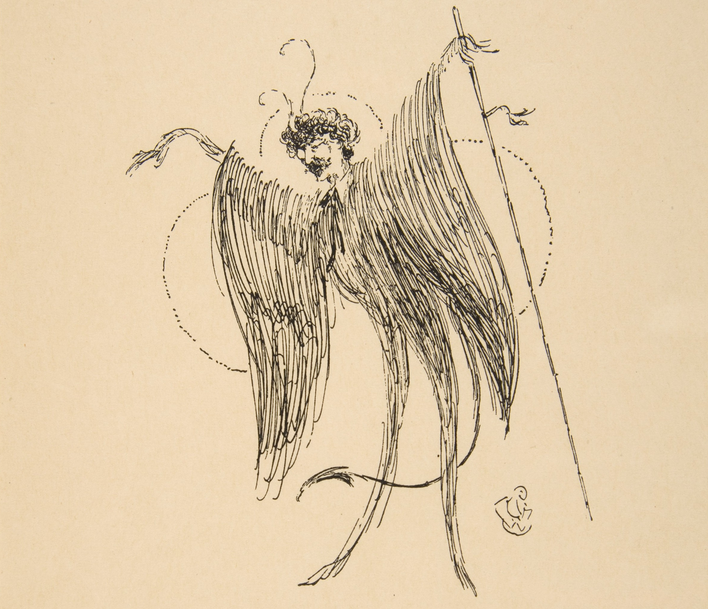 Real names of actual butterflies found in North America (many of which would also make pretty good assassin aliases):
- Sara Orangetip
- Ruddy Daggerwing
- Two-barred Flasher
- White Checkered Skipper
- California Dogface
- Theona Checkerspot
- Zebra Longwing
From now on, please call me Theona Checkerspot. Thanks!
(P.S. That image above? It’s a portrait of the artist James McNeill Whistler as a butterfly. I love Whistler, partially because he seems like kind of a jerk, but an “impish” and hilarious one, kind of like Oscar Wilde, another big believer in art for art’s sake.)
Because they’re beautiful: Here are three neon love letters.

1. Fionna Banner – “Be There Saturday Sweetheart”
This 30-foot-tall neon sign was constructed in 2000 on the top of the New Art Gallery in Walsall, UK. I don’t think it’s there anymore, but I don’t know for sure. What I do know is this: The simple statement comes from the love letters of artist Jacob Epstein to Kathleen Garman. Although she was married to another man when she met Jacob, Kathleen fell in love with the sculptor and eventually left her husband for him. They stayed together until his death. Despite the rocky start (or perhaps because of it?) their letters are filled with sweetness and light. “With you I have every joy and every happiness,” Jacob wrote to his lover. “My nights are my worst time. I lie awake and think of you. Last night, Sunday, was wonderful moonlight and I thought of you, picturing how you were, how fascinating you looked on the balcony beside the lake in the moonlight and the lantern lights… I am always yours Kitty. Be there Saturday sweetheart.” 
2. Robert Montgomery – “The People You Love”
Truth time: I’m making this list today because I’m in a melancholy mood. I have a migraine hangover and my brain is fuzzy and unwilling to focus. I feel like a ghost of myself. I’m being lazy and wallowing—I’ll admit that.
But don’t let that take away from the art, because all three of these pieces are wonderful, lovely and haunting, modern and retro, sweet and sad. Artist Robert Montgomery created this piece after the death of a close friend. For him, ghosts are a positive force, a way of keeping in touch with the people he has lost. “I find the idea that love can somehow triumph over death an idea I need to keep sane,” he said.
But you know what I really love about this piece? It’s not just the ghost-y-ness or the eerie setting or the sparse and square font. It’s the way it turns light into a metaphor for humanity, for that elusive thing we call the soul or the spirit. Stare at a neon sign, then look away. The afterglow remains, spots on our vision. An imprint of what was. A visual ghost. More than a memory, less than a presence.

3. Tracey Emin – “I Listen To The Ocean And All I Hear Is You”
I saved my favorite for the finale. I find Tracey Emin so inspiring, both as an artist and as a human being. I love her brash attitude and her feminist message. I love her sensitive, neurotic, erotic works (I stumbled across “Everyone I’ve Ever Slept With” when I was in college and that piece blew my freaking mind). I particularly love her neon ladies, all naked and glowing with legs spread and toes pointed. I would have shared one of those, but I try to keep my blog SFW, so instead here is one of her text-based pieces (another good one reads: “People like you need to fuck people like me”—not as poetic, but pretty damn funny). Emin’s extremely prolific and likes to work with light-up letters, so if you like this as much as I do, you can see more of her work here.
And you know what? After writing all this and doing the work of inserting images and googling details, I find myself feeling much, much better. I think it’s Tracey’s good influence (or I’m just going to pretend that’s it and not the glass-and-a-half of wine I drank while waiting for my internet to catch up to my thoughts). Thanks, lady.
How to be alive, according to Willa Cather’s grave.
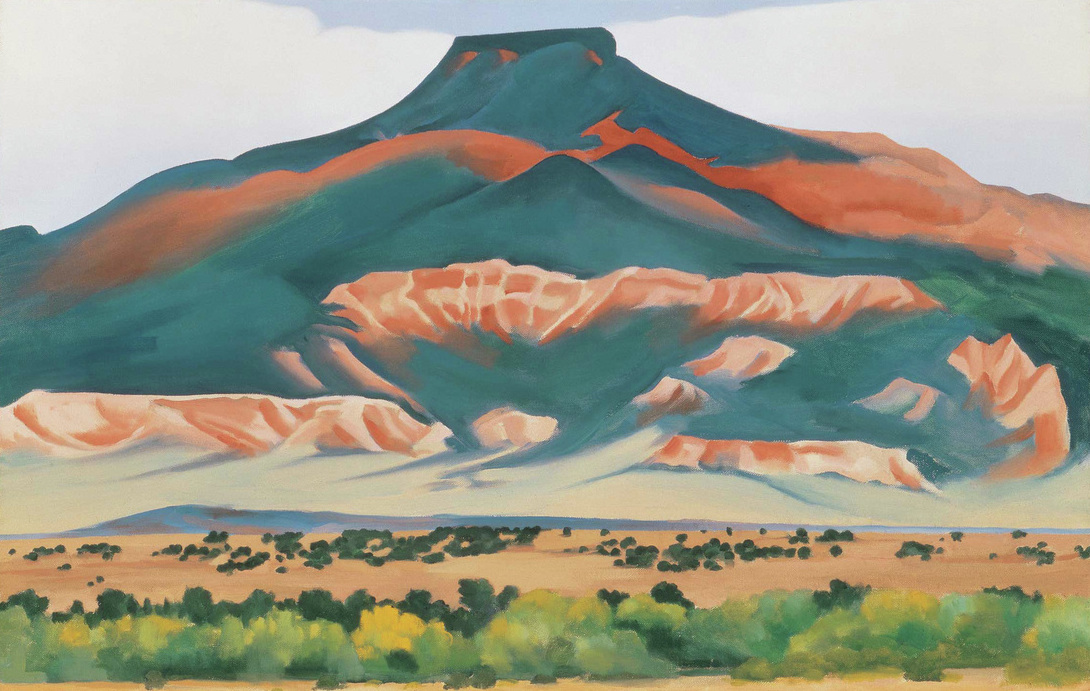 I’ve never understood why people visit the graves of famous people. I’m a very morbid person, yet this never struck me as something I wanted to do. However, I’d like to see Willa Cather’s grave, for as I recently learned, it holds a rather incredible message about happiness, life, and death. The line—”that is happiness, to be dissolved into something complete and great”—comes from her novel My Antonia. Here’s the full passage (found via Brain Pickings):
The earth was warm under me, and warm as I crumbled it through my fingers. Queer little red bugs came out and moved in slow squadrons around me. Their backs were polished vermilion, with black spots. I kept as still as I could. Nothing happened. I did not expect anything to happen. I was something that lay under the sun and felt it, like the pumpkins, and I did not want to be anything more. I was entirely happy. Perhaps we feel like that when we die and become a part of something entire, whether it is sun and air, or goodness and knowledge. At any rate, that is happiness; to be dissolved into something complete and great. When it comes to one, it comes as naturally as sleep.
Although I love the entire passage, I think my favorite part might just be: “Nothing happened.” I’m such a speedy person—impatient to my core. I frequently describe my motions in fiery terms. I burn through my work and blaze through books. I light up and burn out. I consume the world with big steps and fast motions. You know what doesn’t come naturally to me? Slowing down. Letting nothing happen. Being quiet and calm. Sleep.
I often wish I were different, that I could dissolve more easily into a moment. But perhaps that will come with time. If not, I’ll just try to keep Cather’s words in mind. At the very least, it’s a lovely way to think about death—a self disbanded, a body dispersed, a part of something entire.
Image by Georgia O’Keeffe, since the theme of the day is badass ladies of the American west, apparently.
Star light, star bright, last star I see tonight (because light pollution is ruining everything)
These are the things I know about the night sky: I know where to find the Big Dipper. I know that the Big Dipper is also called “Ursa Major” because it is supposed to look like a large bear, though I can’t claim to ever have noticed a resemblance. I know that planets emit steady light while true stars flicker in and out (they twinkle, to use an infantile word I rather hate). I know how to find the North Star and how to spot Orion (it’s his belt, from which supposedly hangs a sword, though let’s be honest: dude’s probably not packing steel, ya hear me?).
I used to know more. I used to know the myths and legends and how to find the vain queen Cassiopeia. But that’s gone now, stuck somewhere in the weird and unreliable filing system of my memory.
I recently found myself staring at the stars and something funny happened: I got lost (or maybe more accurately: my ursine familiar was lost to me). I was camping in Canada, way up north on the coast of Cape Breton Island, in this beautiful place called Meat Cove, which seemed all the more lovely for its terrible name. In this remote place, few lights compete with the stars. There is no light pollution from cities, for there are no cities. There are few cars and fewer towns. When I looked up, I couldn’t find the Big Dipper. Orion seemed to have gone into hiding, shamed at being so easily overshadowed by the sheer wealth of stars. In many places in America, you can’t even see the Milky Way. Up there, you could see that pale, stagnant river of light. But it’s beauty was bland in comparison to the light show going on elsewhere.  “This sky makes me stupid,” I kept saying to my boyfriend. We would go for walks in the semi-dark, and I would trip over stones because my head was turned upwards. (This happens to me a lot, actually. Even city streets are more beautiful when you look at the tops of buildings and not the trash below.) One night, I sat on a rock and stared at the sky for over an hour, just looking. Just watching. Flicker, flicker, little stars.
It’s amazing to think that this experience is so rare—yet it used to be so common. A recent article in Nautilus (one of my favorite publications) profiles an astronomer named Tyler Nordgren who is working to reestablish dark spots in national parks. He wants to make it possible for everyone to get drunk on stars, to stare at the sky until they become lost in its splendor. A fellow astronomer describes the significance of Nordgren’s work in rather romantic—but wonderfully effective—terms: “It’s also one thing all of humanity has in common. It’s the same sky in the Sahara as it is over Philadelphia. It’s also the same sky as Native Americans gazed up at 10,000 years ago. People think of light pollution as an astronomer’s concern, but Tyler helps establish this broad value, that it matters to everyone.”
Does it matter to everyone? Probably not. To be perfectly honest, I didn’t give too much thought to the stars until I found myself silenced by their brilliance. It took driving 15 hours away from home to a campground on the edge of an island for me to see why light pollution matters. It matters because there are so few things in the world that can truly induce awe (and so many things that induce aww but that’s a post for another time). I’m not very spiritual, but the closest thing I have to a religion comes from those strange moments of sublime wonderment, where I become very, very small and the world around me expands, like the universe is supposedly doing at all times, only at a far more rapid clip.
So, I do care. And maybe so should you.
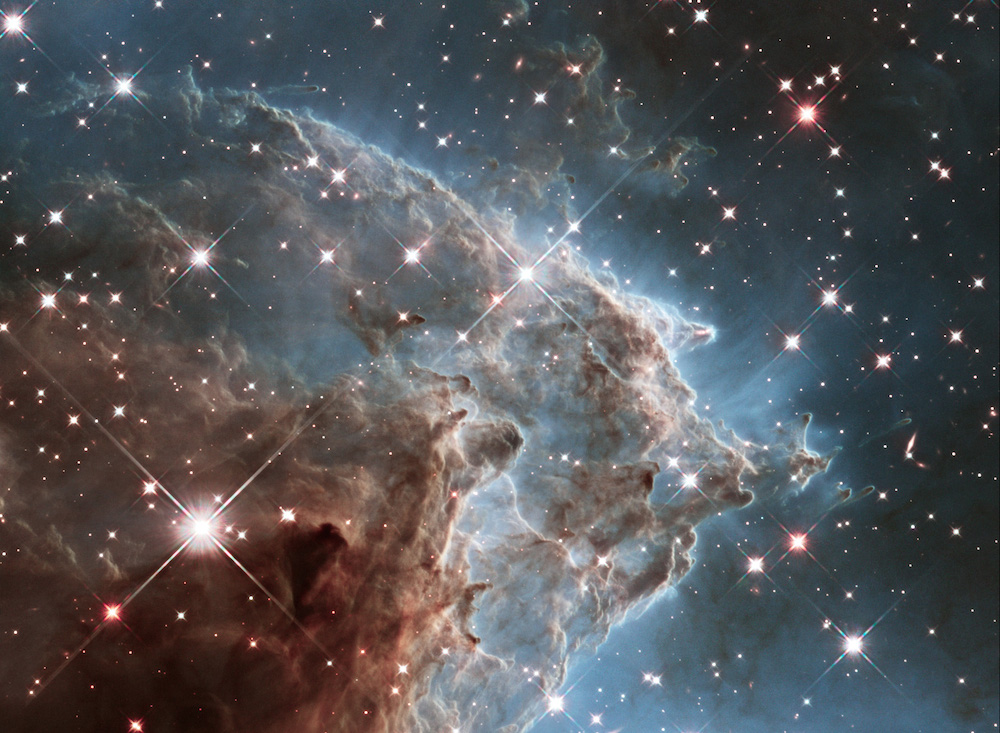
(P.S. The image at the top of this post is from NASA. Taken by the Hubble Telescope, it shows a STAR FACTORY. Really, that’s what it’s called. How wonderful! Thousands of times better than “Meat Cove.”)
Get outside and worship in the Tree Church.
 In the past two weeks, I have gone mountain biking at Sugarloaf, hiked Bradbury Mountain, swam in three rivers and one pond, tried stand-up paddleboard yoga for the very first time, went bouldering and fell on my butt, and climbed up a slippery waterfall. I’m proud of this fact, even though it means I’ve been neglecting my blog and my books and my work. But the easiest way to recalibrate my inner system—to reset my mental state to neutral, to flip the switch from madness to sanity, to stop the centipede from whirling around my skull—is to go outside.
I won’t get weird and preachy here, but I don’t know how to say this without sounding a little too earnest. So I’ll just go ahead and keep it short: I need green things. Nature makes me whole and balanced and good. It’s my jam (friluftsliv FTW).
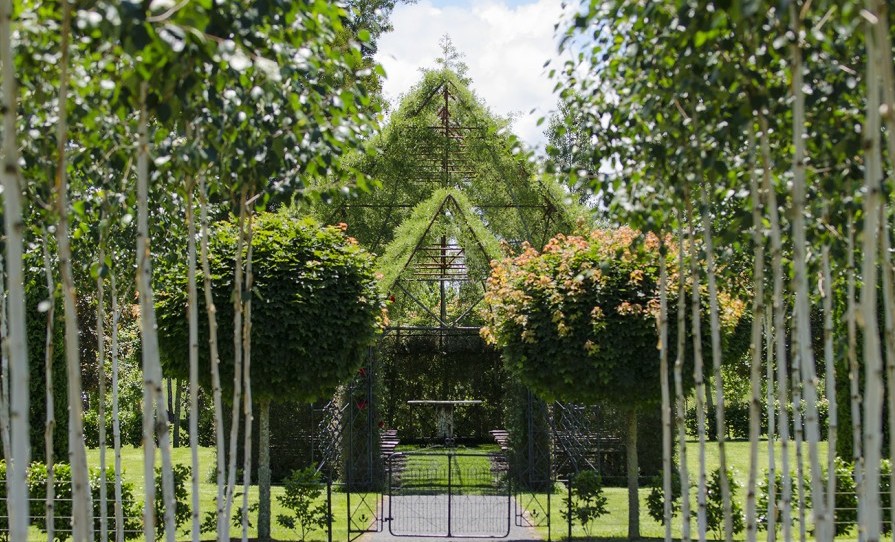
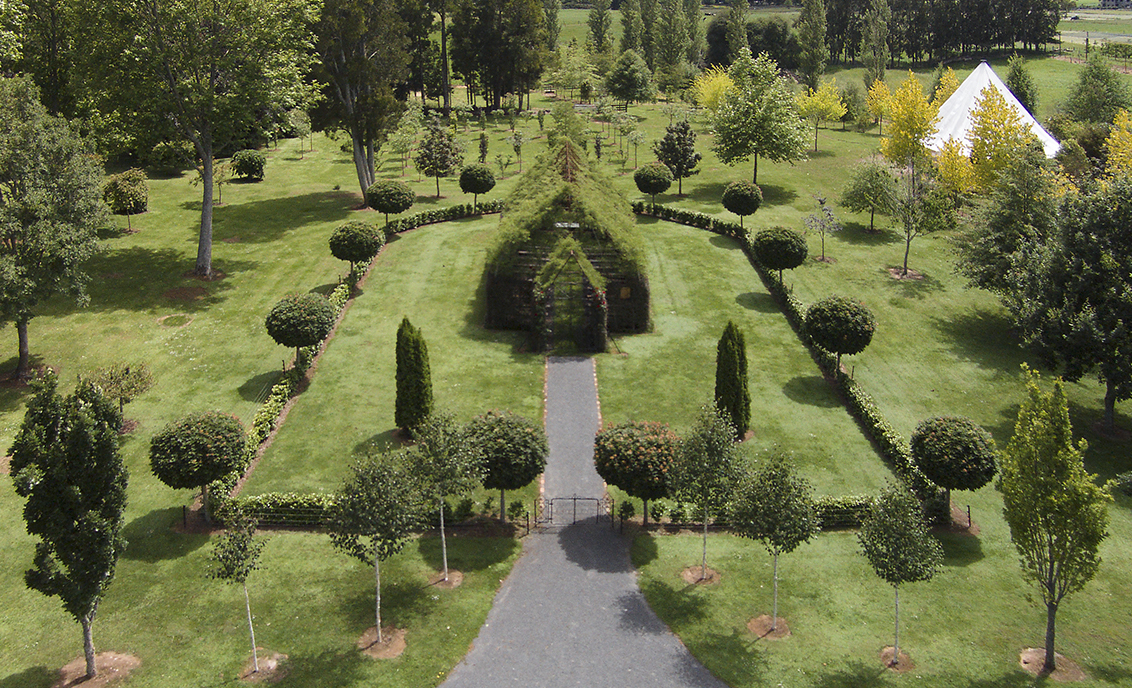 So naturally I fell in love with this outdoor church in New Zealand made almost entirely from living things. “After traveling the world and being a keen observer of Churches, Barry Cox decided to construct a unique Church of his own using living trees,” reads the website. Construction started in April, 2011 and now the church and garden grounds are open to visitors. You can also book it for weddings. How nice would that be?
Sadly, it’s too expensive for my nuptials (not to mention halfway around the world). But what a great idea! It reminds me of earthwork artist Olafur Eliasson’s piece at Bard, the Parliament of Reality. It’s an art installation that also functions as an outdoor gathering space, and I used to visit it often when I was in school. It’s been years; I wonder what it looks like now…
Food for thought: Lee Price paints oral cravings.
 Food is something I think about all the time. As I’m eating lunch, I’m silently planning what I will have for dinner. I know many people don’t operate this way; my obsession is born from two things: a history of disordered eating and a real compulsion to savor everyday joys. I know, that’s a lot of contradiction. But I think it’s true. As much as food has given me grief in the past, it’s also something I adore. It’s the easiest, fastest way to gift yourself with a moment of happiness, a burst of pleasure. Out of all our cravings—and I know you crave more than just food because everyone does—it’s the most harmless to indulge (except earworms, but that’s a craving of another aural/oral sort).
 And yet. Food is still so fraught, and that’s especially true for women. Hyper-realistic painter Lee Price digs her heels in and confronts the complex rat-king tangle of emotions that is nourishment in her recent series of self-portraits. “The areal view evokes the feeling of an out of body experience: the subject is watching herself engage in a compulsive behavior but is unable to stop. There is an absurdity to this act of compulsion. At the same time it is an attempt to find real nourishment,” she explains. There’s something at once both comforting and disturbing about these pictures. They feel brave. And yet. To call them brave seems strange. It’s just an artist eating food in a bathtub, right? It’s just a woman chowing down, right? But like, is it ever? (No.)
 I won’t go into a big feminist rant here because I’m sleepy and that’s not really what I do on my blog anyway. But I will say this: I love her work. I love food. I hate food. I can’t imagine a world in which I would ever let someone photograph me eating in a bathtub. But Price did that to create her uncannily seductive paintings and that’s freaking badass.

How is your heart doing?
 It’s a familiar script. “How are you doing?” asks one friend. “I’m so busy,” says the other. Or, if you’re me, “I’m underwater with work. I’m so busy I’m practically drowning.” Underwater. That’s how I describe my life far too frequently. If I don’t utter a noncommittal and unconvincing and ungrammatical “I’m good,” I almost always say I’m busy. I tell everyone what I’m doing, not how I’m doing. I talk about actions and places to be, things to accomplish, plans and goals—all the things that tug on my subconscious and give me anxiety dreams. The things that pull on my insides. The things that tax me. (What a great word, right? The things that tax us. That take away pieces over and over and over.)
But it doesn’t have to be like this, explains Omid Safi:
In many Muslim cultures, when you want to ask them how they’re doing, you ask: in Arabic, Kayf haal-ik? or, in Persian, Haal-e shomaa chetoreh? How is your haal?
What is this haal that you inquire about? It is the transient state of one’s heart. In reality, we ask, “How is your heart doing at this very moment, at this breath?” When I ask, “How are you?” that is really what I want to know.
I am not asking how many items are on your to-do list, nor asking how many items are in your inbox. I want to know how your heart is doing, at this very moment. Tell me. Tell me your heart is joyous, tell me your heart is aching, tell me your heart is sad, tell me your heart craves a human touch. Examine your own heart, explore your soul, and then tell me something about your heart and your soul.
Last night, a friend asked me how I was doing. I didn’t have words at the moment. Instead, I started crying in the middle of a bar. Crying in public is a strange thing—to be so intimately on display in such an uncomfortable, unscripted, undesirable way. It’s a little grotesque, and people never know where to look. And yet I do it all the time. Partially because I’m just overflowing a little bit all the time, but also because I’ve stopped caring about whether my current emotions are too much. (When I did care about this, the answer was always. They are always too much.)
But also, I’ve learned that crying in front of others can become joyful far more quickly than crying alone. Yes, I do feel ridiculous when my eyes are leaking saltwater and my nose is threatening to join in. But then I saw her face become sweet and sad and concerned. And my heart began to feel less scorched, less fragmented. Sometimes, the recognition of others, their willingness to ask about the shape of your heart, sometimes that can give back the little pieces that are taxed away by the everyday. It gives you back the bits of yourself that you didn’t realize you had lost.
It’s attentiveness and recognition. To be seen. What a gift.
How is your heart doing today, friend?
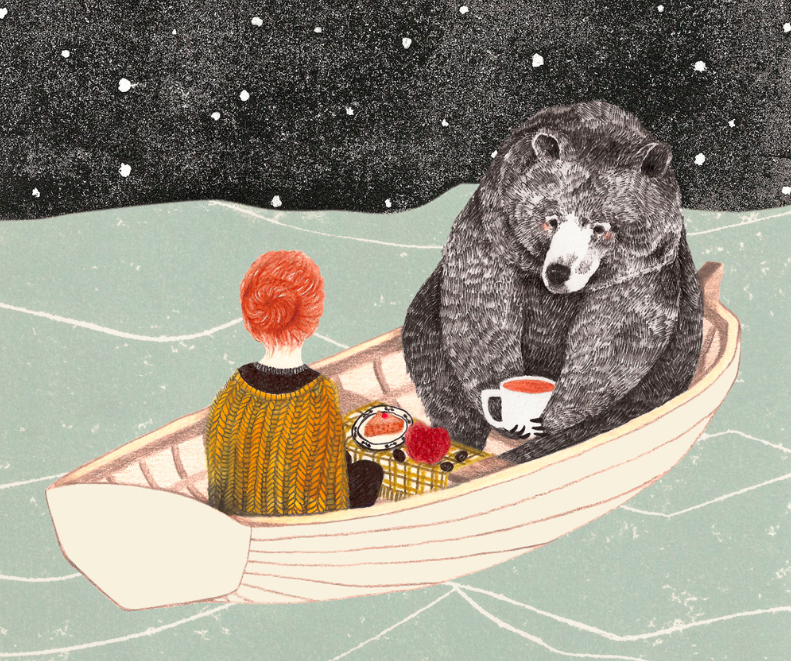
P.S. The art above is available for purchase here, along with many other very beautiful drawings and pieces. Go check it out.
Good advice on how to deal with a dance mishap (and embarrassment in general).
 A piece recently published in The Guardian called “Top 10 Lessons from Books of the Past” includes quite a few gems, but this one from 1538 is my favorite by far:
When you fall, pick yourself up quickly, and go back to finishing the dance energetically without complaining at all: pa-trim pa-tro-lo! And if you don’t get up, you will not be able to fall any further: there is nowhere to fall for one who is lying on the floor.
Obviously, this applies to more than just dancing. Remember, guys: You can’t fall any lower than the floor! So, if you find yourself lying on the floor (as I often do—hey, it’s comfortable!) just stay there. Or get up. Either way, you’ll be okay. Everything is always pretty okay in the end.
Another nice snippet of old timey advice on how to leave a party, from c1200:
When you are about to leave, let your horse be at the door; don’t climb on him in the hall, unless the host tells you to.
I mean, I just prefer the classic Irish goodbye (or in certain circumstances, the “Jamaican peace out”) but getting on your horse while still in someone’s living room works, too.
 Katy Kelleher