Bryan Nash Gill turns trees inside-out.

bswoodc11“If you were a tree, what kind of tree would you be?” It’s a silly question, but I like to ask it. I think what people say is telling. I’ve noticed that some think they’re strong, solid trees (and often think in terms of furniture and the use of the wood), while my female friends are more likely to call themselves aspen, or birch, or even magnolias. I’ve always loved dogwood trees myself, but there is something wonderful about a tall, white pine. Or the vanilla-scented ponderosa pines. Trees tell stories, I think.

Judging by his work, Bryan Nash Gill probably has thought about my goofy, getting-to-know-you question. How could he not? His art works are so deeply inspired by trees, from his gallery installations and sculptures to his fantastic prints. He creates these images (like the one above) by covering a tree stump in ink, and placing the paper directly on the wood. It makes an imprint of the rings, of the entire history of a tree. It looks like a fingerprint, but it’s much better, for unlike our static prints, these uneven loops change and grow every year (that is, until someone cuts them down and looks inside).

While I like the tree prints best, he has a fantastic body of work. See more on his website.

Late to the party: Nick Knight’s “Flora”

Nick-Knight-FLORA-1-Fashion photographer Nick Knight has been making people gasp for years but I just got to know his work today, thanks to his book Flora. While his pictures of wilting waifs are gorgeous, I’m more drawn to his dripping flowers. They’re drenched with color, saturated with pinks and reds and purples and other colors that remind me of broken veins and beautified bruises. Darkly pretty, except they strike you as pretty first… the eerie feeling creeps in after looking at it a little too long.

It’s like his lovely, lovely photos of women sleeping. At first, they are sweet pictures, images of the body at rest. But then, when you imagine the position of the photographer, the place they must have stood, the voyeurism implicit in such a shot—then they become sinister. Fully realized in their power.

Weird, pretty, creepy, lovely. I like it.

I Like You: Some great (cheap) art prints.

I need more art on my walls, but purchasing originals is out of the question. Instead, I’ve become addicted to sites like 20X200 (now sadly defunct) and Society 6 to fill my visual hunger. Here are a few prints from Society 6 that I’m crazy about right now. I’ll probably buy one of them before the day is over…

society 6 horsesI’ve been eying this one for a very long time. How nice would it look blown up huge on a stretched canvas over my dark blue couch? Really nice. Winter Horseland by Kevin Russ.

Society 6 LayersThis is another one that I would want to order in the largest size possible. It feels a little bit abstract, but calm. Layers by Cameron Booth.

society 6 fawnThis little lady I would want teeny tiny, in a small white frame. If I had a kid, I would hang it in their room. So cute! Fawn by Emily Hamilton (her other work is great, too).

Society 6Summer RefelectionsThis is my favorite one. The problem is, I don’t want it in a frame. I want it huge! And they don’t offer it in larger sizes. It’s so dreamy and gorgeous. It seems like my bedroom is all green and gray, and this would be a nice touch of color. Summer Reflections by Oliviia Joy StClaire.

societysixdavidAnd last but not least is this image by David Fleck. I don’t know where it would fit in my house, but I love all his work. He has a great style, and a propensity for hot air balloons. I love hot air balloons. The Start of Something by David Fleck.

Rachael Rice’s dreamy work.

rachael riceWhen I was little, I used to make dreamcatchers all the time. I was obsessed with Native American mythology and culture. I read every book in our elementary school library on fairy tales, myths, and legends. I didn’t really like any other kind of book. I wanted to hear about the girl who married the moon, or the boy who turned into a bear.

I think that’s why I’m still so drawn to dreamcatchers. Though sometimes a little cheesy, they’re gorgeous when made right, and artist Racheal Rice does it right. She turns the dreamcatcher into a glorious mess of ribbon and beads. The woven center holds it all together, gives it a depth and geometric balance. I would love to have one of these hanging above my bed.

But I might need to settle for a dreamcatcher print. Society 6 has some nice ones…

The History of Pretty: The most beautiful sculpture I have never seen.

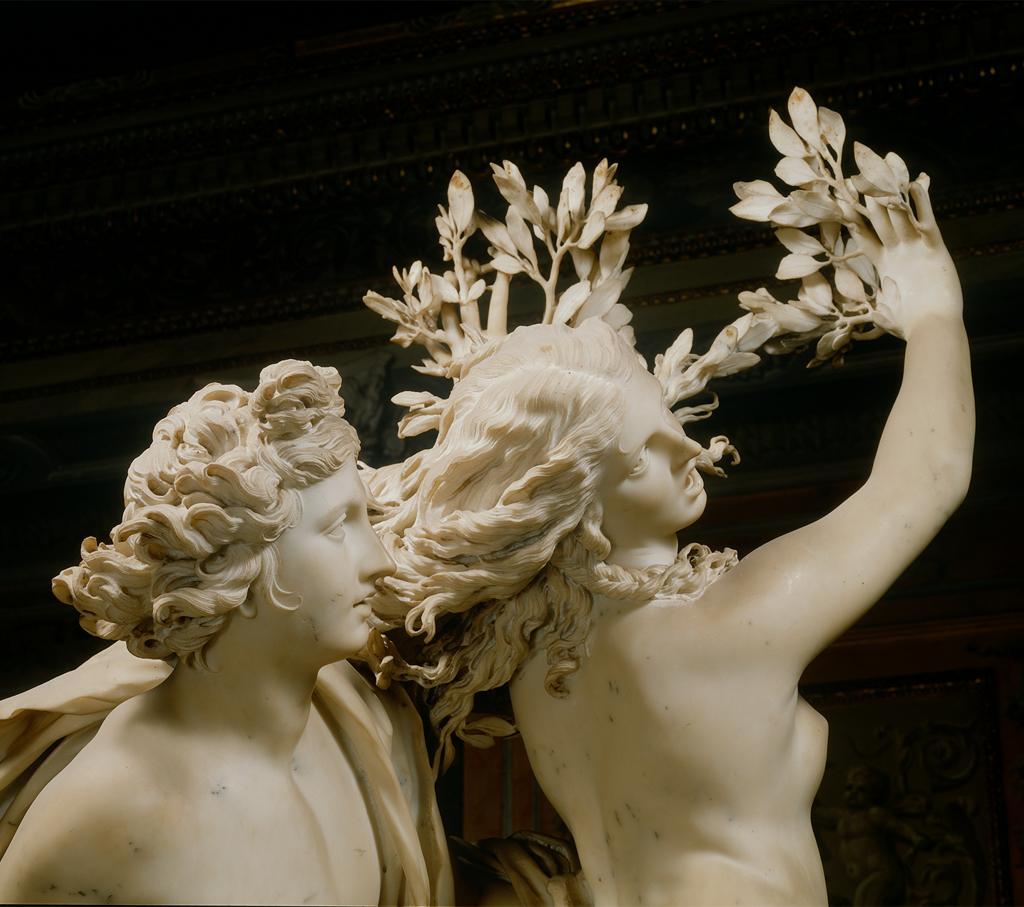
Bernini3If you asked me to name my favorite sculpture, the answer would be easy: Bernini’s Apollo and Daphne. While baroque painting was never my favorite—except Caravaggio, because it is impossible not to adore Caravaggio and his bloody, beautiful youths—baroque sculpture and architecture is truly amazing. And what Bernini could do with a slab of marble is particularly amazing.

bernini_apollo_and_daphne2Just look at the way her limbs change into trees! It’s like looking at music. It’s so poetic and deeply alive. This sculpture shows the culmination of the myth of Daphne, a river nymph (and thus a woman after my own waterlogged heart) who is chased by the god Apollo, who seeks to possess her after being hit with Cupid’s mischievous arrow. Daphne calls out to her father, the god Poseidon, and begs for some way to avoid the seemingly inevitable rape. He decides the best thing to do is to turn her into a tree, because this is before we had words for everything and dendrophilia hadn’t yet been invented. Bernini, like all baroque artists, seemed drunk with drama, and so he chose to depict the “couple” at the moment of her transformation.

Yes, it’s a statue of a woman escaping her rapist by becoming a plant. It is dark and a little terrible, but it’s also breathtakingly beautiful and amazingly detailed. I hope someday I get to see it in person.

Where the wild things are.

312033_415917278455577_1915020339_nI find it endlessly fascinating how people around the globe have created folklore and mythology that falls along the same basic narrative structures. People as beasts, beasts as people. Spirits that need to be appeased, and sacrifices that must be made. The dead who walk again, and the living who wander into the twilight land between. These stories are told again and again, from language to language and mouth to mouth. It’s beautiful, if you think about it. We’re all beasts, inside. Wild men, in the words of photographer Charles Freger.

02-portugal-lazarim-character-caretos-670Freger captures the wild men of Europe in their various costumes and headdresses. With a few simple materials, the human body is transformed into fantastical shapes, shaggy creatures of imagination and deep symbolism.

312090_415917238455581_1283995928_nLooking at his photographs, I find myself feeling an odd envy. I have never enjoyed Halloween and the skimpy outfits it seems to inspire, but I would love to turn myself into a fearsome (yet wooly) creature, a brute straight out of a fairytale.

Alternatively, it would be nice to go around Europe snapping pictures of these colorful rituals. Feed your own envy here.

Kiyoshi Mino makes furry friends from felt.

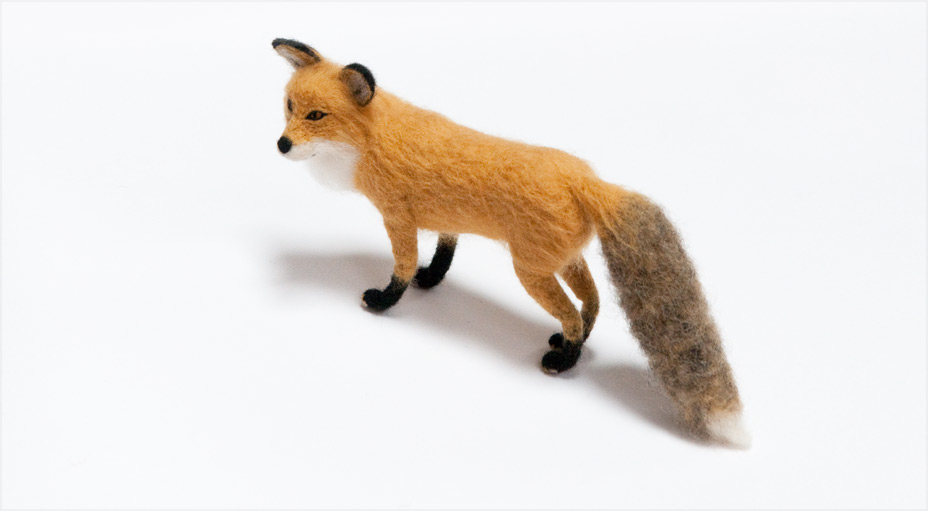
fox7I’ve probably mentioned my undying love for foxes on this blog before, but for good measure, I’ll say it again: If I had to choose a favorite animal, it would always (and forever) be the clever, wily fox. Once, when I was in college, I had a girl I worked with tell me that I reminded her of a fox because “you can be very cunning, and I bet you’re good at manipulating people.” I was kind of offended, but I have to admit, it was a little flattering, in a weird way. I like to think I’m nicer than that, but who knows? Maybe being a fox is a good thing.

As usual, I’m rambling about myself in order to introduce a very talented artist. Kiyoshi Mino is currently attending The Farm School down in Massachusetts (a place I had never heard of, but after googling it I immediately wanted to drop everything and enroll). It was there that he found his artistic medium: needle felt. He now creates detailed sculptures of animals out of wool. But as much as I want to snuggle them, they’re not stuffed toys. He sells his pieces for around $500 a pop. His menagerie includes a variety of fauna, both wild and domesticated. His portfolio includes owls, cranes, sheep, cats, donkeys, and other beasts.

Screen shot 2013-03-31 at 5.49.08 PMI admit, I don’t know much about needle felt, but it seems like a great technique. I really admire anyone who works with fiber arts, especially since it seems at once so traditional, and yet so modern.

Check out Mino’s website here, and be sure to read the “about” section. He’s lived a very interesting life.

Two cool things: Green architecture, plant emotions.

PIC_MarkMiller_11. Plant-In City. I’ll let their description do the talking:

Mankind is increasingly leaving nature behind, migrating to concrete jungles where green space is at a premium. Yet urban dwellers will always long for a connection to the earth: we build parks, protect nature reserves, and grow gardens. We’ve become adept at shaping nature to fit our multiple spaces and lifestyles.
Plant-in City is a collaboration between architects, designers, and technologists who are building new ways of interacting with nature. Our 21st century sculptural terrariums combine modular architecture, basic laws of physics, embedded technologies, and mobile computing to construct a “Plant City” where the aesthetic meets the pragmatic.

2. Do plants have emotions? We were discussing this at work the other day, and while my first inclination was to be really skeptical, I’ve been a little swayed. No, I don’t think weeping willows actually need Prozac, just that maybe there’s something these living creatures pick up on that is kind of, maybe a little, like our empathy. Further reading can be found on NYT.com, but this is one of those weird moments when I don’t want to know too much more. According to some people, plants react when living things are killed. Perhaps it’s true, perhaps it’s not, but I rather like that idea and for now, I would like it to be so.

I think this must be how people in Iceland “believe” in fairies. According to one article, 80% of Icelanders think fairies are real. Maybe they do, or maybe 80% of the country just has a more whimsical outlook on life than we do. Either way, I want to go to Iceland and see some freaking fairies.

The History of Pretty: I Love Alphonse Mucha.

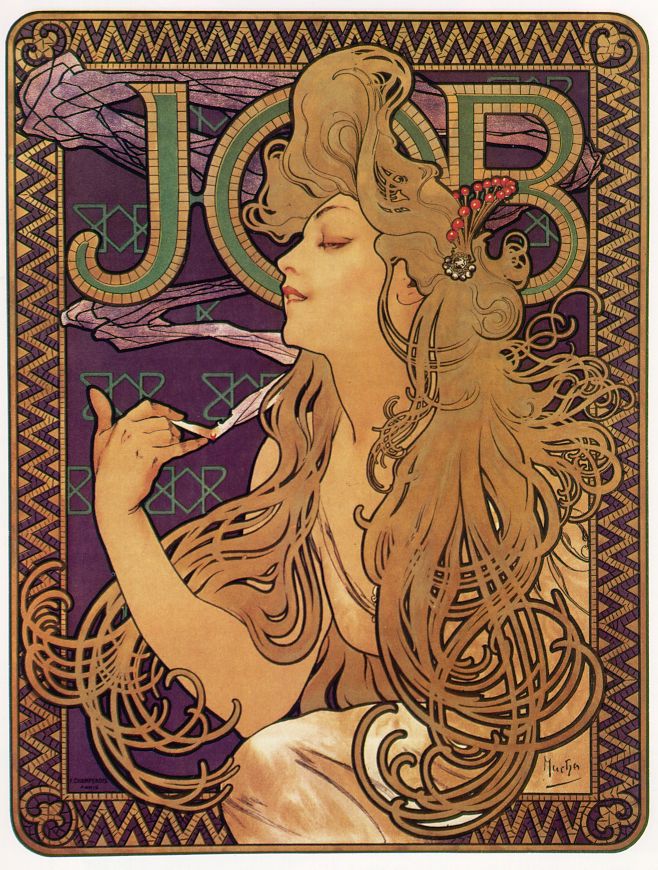
Mucha 1I decided I need a bit more consistency in my posts, so I’m going to start a series where I highlight my favorite artists from history. It’s one part review (I learned so much wonderful stuff in college and then never used it again) and one part blogging exercise. Two parts futile? Perhaps! But does one really need an excuse to look at Mucha’s gorgeous ladies? If your answer is yes, you’re wasting my time, then I really just don’t know why you’re reading my blog.

alphonse_mucha_danceMucha was a Czech artist who lived during the late 19th, early 20th century. As you can see from his works, he was pretty invested in the whole Art Nouveau thing—in fact, he practically invented this particular poster style, which went on to become immensely popular in fin de siecle Paris. But Mucha was also crazy popular in his motherland. Following his international success at the 1900 Universal Exhibition in Paris, he returned to Prague to create art that he felt was truly reflective of the Czech history and character.

While a lot of people know him for his pretty posters that adorn dorm rooms of quasi-artsy young adults all over the world, I have always loved his pieces that depict the “Czech woman.” He idealized the Czech peasant ladies, with their strong bodies and long, flowing hair. He wanted to capture the spirit of his small country, and he often did this through allegories. Sure, he also did plenty of advertisements, but I’ll never forget seeing pieces from “The Slav Epic” and his seasons series at the Mucha Museum in Prague. While his style is stamped all over the city, from twisty, organic-inspired light fixtures to hand-painted flowering vines that adorn the exterior of an otherwise unremarkable building, it was fascinating to see so much of one artist’s work in one place. I brought home a poster, which has since been crushed and wrinkled out of shape. But I don’t think I’ll ever throw it out.

job

I love public art, especially Filippo Minelli’s man-made clouds.

filippo-minelli-shape01I think artists who create in the public sphere are so goddamn brave and so freaking important. Art doesn’t just belong in museums—it belongs everywhere. In fantastic design, in beautiful typography, in the books we read and in the things we eat. Yes, I’m getting carried away. But I really, fundamentally believe that art is and should be everywhere, and the people who say “but I could do that” should probably be taken away and put in a boring gray cubicle where they can live out the rest of their lives without any aesthetic stimulation or provocative sights.

Whew. Today is apparently a day for rants (it’s also a day for taxes, but I’ll save that rant for my freelance friends). It’s also a good day to look at Filippo Minelli’s gorgeous photographs. The artist has been creating public art works since the early 90’s. A lot of his pieces play with borders and boundaries, liminal spaces and weird half-places. He has plenty of cool work, but I’m particularly drawn to the Silence/Shapes series. It’s an ongoing project of colorful clouds in natural spaces—or, as he describes it:

Decontextualization of a violent tool changing quickly the surroundings, creating chaos, blinding the eyes, used in natural landscapes. The result proves that beauty can be found in clashing visions with an approach and aesthetic similar to romanticism. Showing the power of nature with the implication of religious aspects. Juxtaposing violence and beauty as a political statement. Giving silence a physical shape to be aware of its presence in the age of information and communication technology.

PUBARTI know you’re interested in silence, but please, Filippo, keep talking. I like the things you say.

More here.