Baring it all, body and soul. (Or, why poets are the bravest people on the planet.)

patti smith
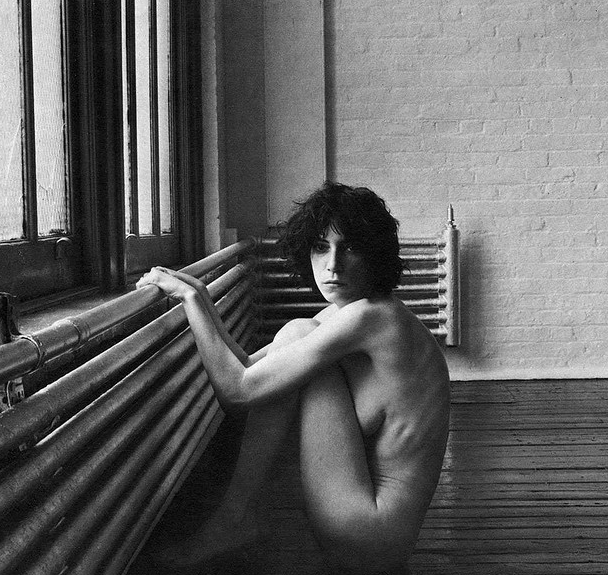
Found today: “Poets Without Clothes.” It’s a website of—you guessed it!—poets without clothing. Some are half-naked. Some are nude. Some are showing their bare toes. Some cover their breasts. But they’re all vulnerable and rather sweet. The Tumblr was inspired, naturally, by Walt Whitman, he who wrote:

   Let us all, without missing one, be exposed in public, naked,
monthly, at the peril of our lives! let our bodies be freely
handled and examined by whoever chooses!
Let nothing but copies at second hand be permitted to exist
upon the earth!

I wonder, which feels more raw: stripping off your clothing for a photograph, or stripping bare your soul for a poem? Which tears at the fabric of your being more? Which induces more shame, which brings more joy? They’re similar acts, but not the same.

Here’s a good would-you-rather for your next party:  Would you rather bare your body in public, warts and all, or publish your most jagged and painful personal thoughts? Personally, I’d rather take my top off.

Above: Patti Smith in the nude. More here.

“For heaven I’m a failure, for earth I’m as good as anyone else.”

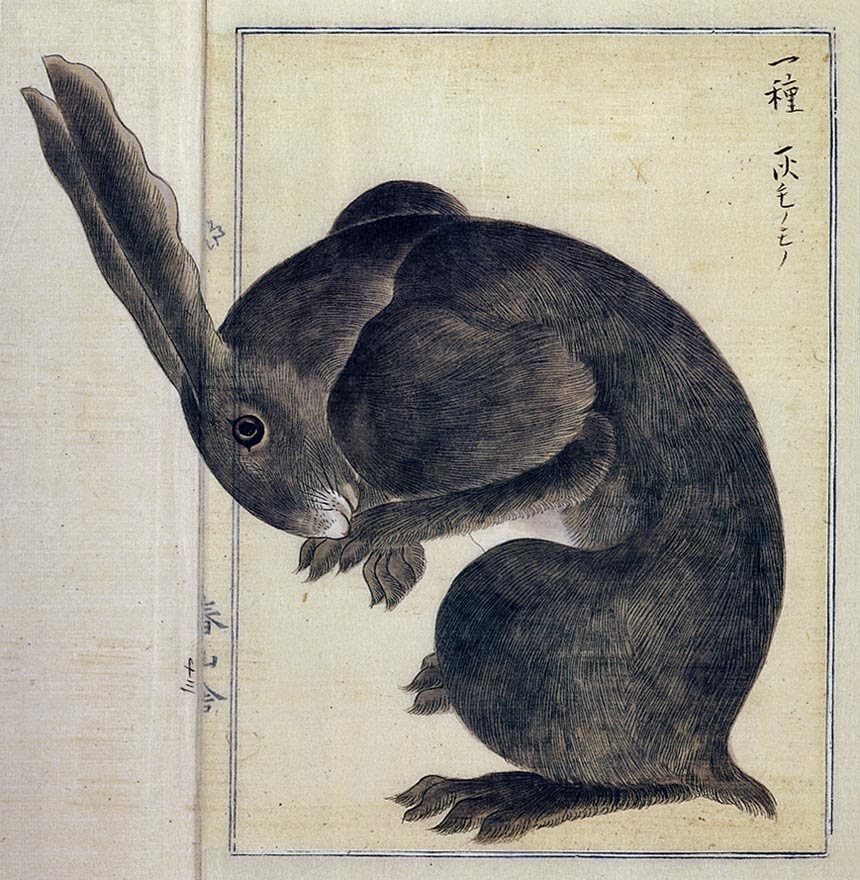
TakagiHaruyamaTwo things today:

1. My Bubba is a fan-freaking-tastic musical duo composed of two girls—one Swedish, one Icelandic—who make the kind of dreamy yet down-to-earth music that my heart is currently craving. Do you like smart, poetic lyrics with haunting vocals? Well, then you’ll dig these ladies. Start here. Fall down the NPR rabbit hole. Enjoy.

2. I’ve been reading a lot of mythology lately and one of my favorite stories comes from Japanese folklore. It’s about the moon-rabbit, a mythological creature that lives in the sky. There are so many different stories about the moon, but this one has stuck with me. Wild rabbits (like bears) show up in my dreams fairly often, and I feel a weird kinship with those scattered, scared creatures. Anyway, if you’re not familiar with the story, here it is….

Continue reading

Sylvia Plath draws bulls and bull thistles.

bull sylvia plath“It gives me such a sense of peace to draw; more than prayer, walks, anything. I can close myself completely in the line, lose myself in it,” wrote 24-year-old Sylvia Plath in a letter to her mother. She describes coming upon a bull in a field (at least, she thought they were bulls for “they seemed to have no utters”) and sitting down on a river bank to draw those cows—”my first cows.” sylvia-plath-purple-thistle-drawingHer drawings aren’t perfect or particularly noteworthy. But Sylvia Plath is one of those writers who I admire reflexively. When I was younger, before I knew better, I admired her for her tragedy, for her sadness and her bitter bleak world. Now, I admire her language. She writes with the same sparsity with which she draws: simple, bold, present.

More here. Or buy it here.

Two scary things, in honor of the holiday.

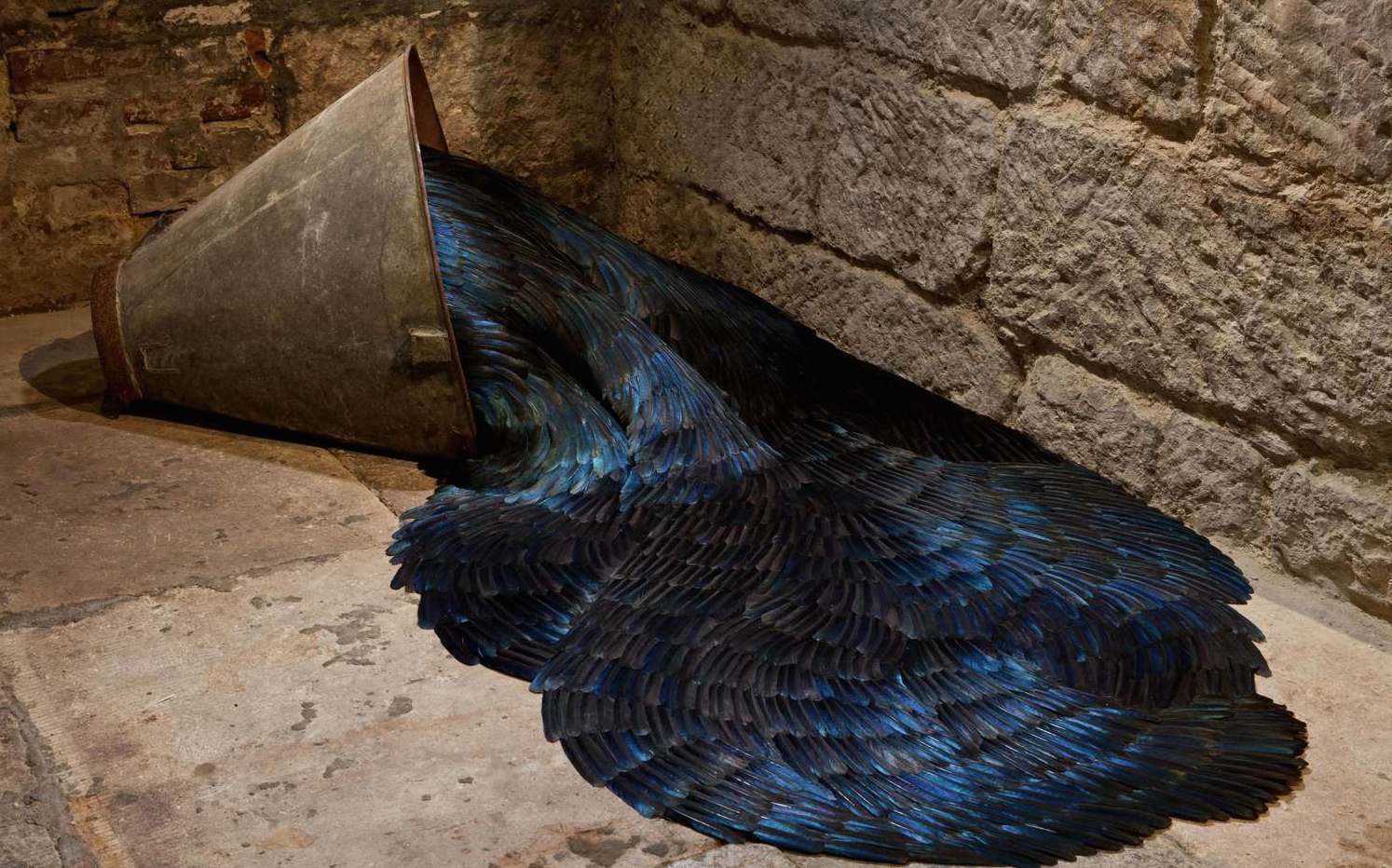
Kate MccGwire Secretions Art Instillation
1. From Shirley Jackson, a true master of horror writing and vastly underrated writer, the best way to begin a book:

No live organism can continue for long to exist sanely under conditions of absolute reality; even larks and katydids are supposed, by some, to dream. Hill House, not sane, stood by itself against its hills, holding darkness within; it had stood so for eighty years and might stand for eighty more. Within, walls continued upright, bricks met neatly, floors were firm, and doors were sensibly shut; silence lay steadily against the wood and stone of Hill House, and whatever walked there, walked alone.

Shirley Jackson, The Haunting of Hill House

If you don’t have chills after reading that, go ahead and read the whole book. I’ll wait here. (Shirley Jackson is my all-time favorite author. I wrote my college thesis on her—and Poe and Toni Morrison. It was about ghosts in American literature… I was/am/will always be a nerd.) Kate MccGwire art installation of feathers

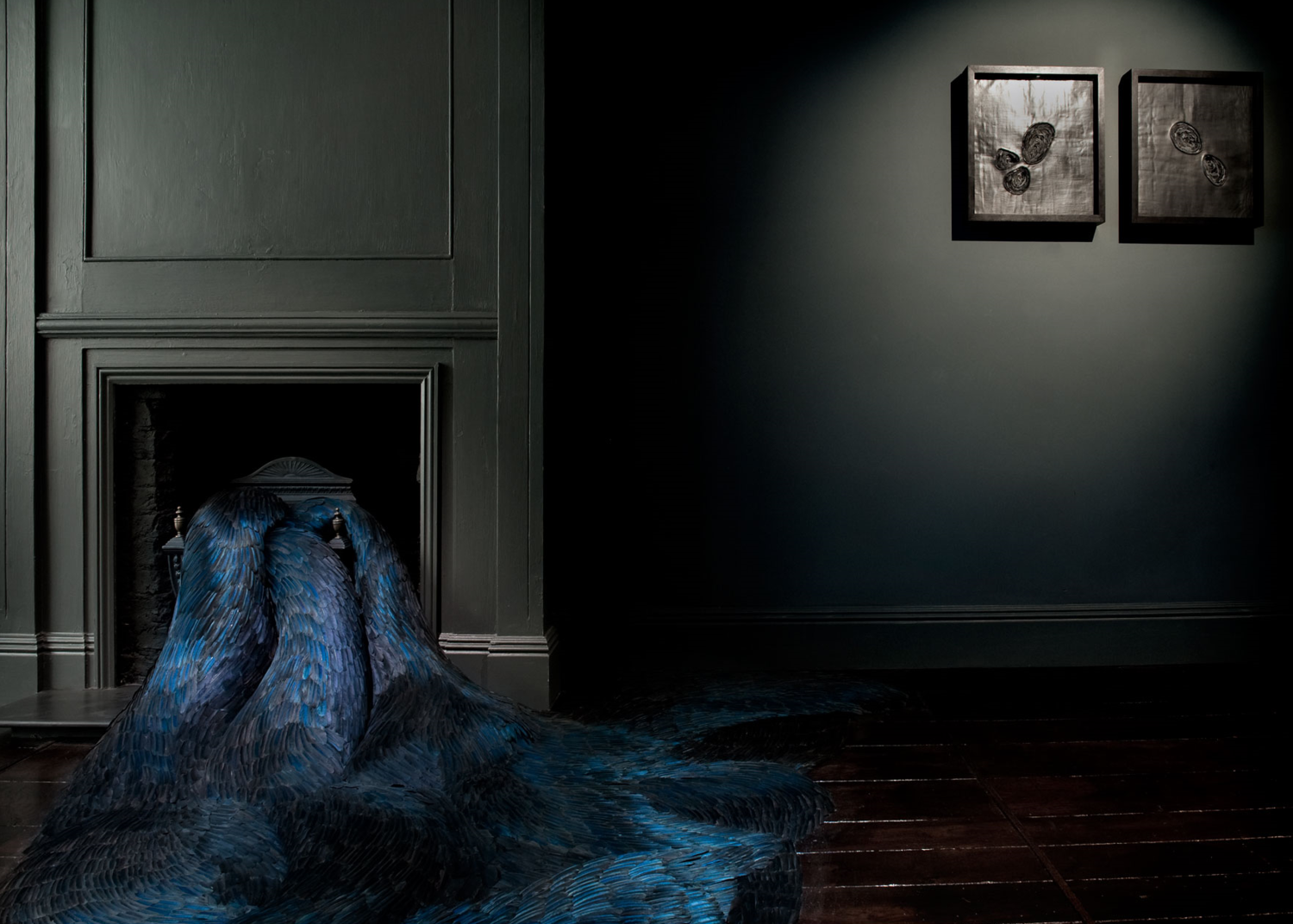
2. British sculptor Kate MccGwire makes wonderfully nasty and strangely beautiful art installations out of feathers. They’re textural and rich and oh-so-creepy. Plus, they all have fantastically horrifying names, like Secrete (top), Siren (second image) and Slick (below). Some of her other installation names include Purge, Gyre, Corvid and Specter. I love how her pieces feel both organic and naturally occurring, and utterly uncanny in the most Freudian sense. They’re a double gut-punch of pretty and creepy. See more here. Slick,+2010,+Kate+MccGwireHappy Halloween! 

A little reminder of what’s important.

stuart little

“How many of you know what’s important?”

Up went all the hands.

“Very good,” said Stuart, cocking one leg across the other and shoving his hands in the pockets of his jacket. “Henry Rackmeyer, you tell us what is important.”

“A shaft of sunlight at the end of a dark afternoon, a note in music, and the way the back of a baby’s neck smells if its mother keeps it tidy,” answered Henry.

“Correct,” said Stuart. “Those are the important things. You forgot one thing, though. Mary Bendix, what did Henry Rackmeyer forget?”

“He forgot ice cream with chocolate sauce on it,” said Mary quickly.

“Exactly,” said Stuart. “Ice cream is important.”

— Stuart Little, E.B. White

Calling something a “kid’s book” or “children’s literature” should be the highest compliment. After all, I don’t know anything that taught me so much about bravery and kindness as spending time with Lewis Carroll and E.B. White and Tamora Pierce and J.K. Rowling and Roald Dahl. Kid’s books are brilliant. And sometimes, kids are brilliant, like little Mary and Henry, who answered Stuart’s question just right.

Plus, it’s worth nothing that E.B. White had an awesome sense of humor in his everyday interactions, too. Just look at how he turned down a rather impressive offer from an earlier POTUS: Continue reading

On radical empathy and trying to be a human being.

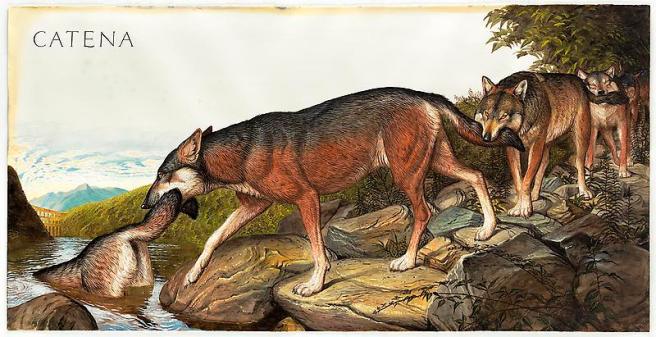
Walton_Ford_Wolf_ParadeI teach kids writing part-time. One of the things I teach them is how to actively listen. “When you interview someone, you have to listen, really listen,” I tell them. “You have to listen hard to what they’re saying. You have to be an active listener.” I tell them variations of this. I tell other writers variations of this, too. I say I’m working on being an active listener, an empathetic listener. I say this will help my “craft,” though I don’t like to use that word (it seems much too lofty for magazine writing). What I don’t tell anyone is the truth. That I listen most when I’m most depressed, that this is my way of hiding how toxic I am, how poisonous my company can be.

Does this sound virtuous or self-pitying? I would prefer it to sound virtuous, as though I were saving my bad energy for those who deserve it (i.e. myself). I suspect it sounds self-pitying and rather self-promoting. Look how good I am! I practice empathy like overachieving children practice the violin. Fumbling, out of tune, cringing at their audience, balanced narrowly on the edge of embarrassed and proud.

Listening closely allows me a way out of nearly every social situation. It doesn’t require me to pass judgment or think analytically. I have sat quietly and listened while friends describe their ongoing affairs with married men. I have nodded and told them I could sympathize, that I could see how hard it was on them. I have listened closely while someone very close to me told me about her suicidal thoughts. I looked at her, staring into her face. “I understand,” I said. I offered nothing else. I have let justifications sweep over me quietly as one friend eviscerates a mutual friend, tearing them to tiny, petty shreds. I nodded. She needed to vent. I get it. I always get it.

This is my biggest strength and my greatest weakness. I am a big bloody mess of emotion that drips all over everything. Am I staining your carpet? I’m so sorry. I have had things ruined by this problem, too. Please forgive.

It’s a complete cop-out though. It’s a way to phone-in human interaction. It seems so deeply virtuous, so wonderfully kind. Empathy is so important—I do really believe that. But I also feel an excess of empathy sometimes, a porousness in myself that I fear goes both ways. The world bleeds so easily into me, I must bleed so much onto it.

I read about someone who was practicing radical honesty. They weren’t allowing themselves a single lie, not even the kind we call white. No “I’m almost there, just give me five minutes!” No “Seriously, it tastes great!” I find that idea terrifying. Honesty all the time can be exhausting and dangerous. But maybe empathy all the time is just as bad? I believe that there’s a brutality to any kind of excess, just as there’s a beauty in excess. Maybe brutality and beauty go hand in hand and they always will—the older I get, the more I suspect this is true.

Or maybe I just don’t understand the world yet. Maybe if I listen more closely, I will.

Image by the great Walton Ford, whose work I admire so, so much. 
Iceland is magic.

Andre-Ermolaev_Iceland_photograph
2015 has been a strange year for me. It’s been a year of very high highs (engagement! book deal!) and very low lows (cancer. surgery.) and all the forward motion has my head whirling. So, I did what I always do in times of stress: I booked it outta there.

I’m writing this from Iceland. I’m staying in a little wilderness pod on a peninsula in western Iceland, about an hour or so north of Reykjavik. I’ve been to Iceland before, but I didn’t get to truly experience it. Now, I’m traveling abroad alone for the first time in my life and I love it. I’ve been here for less than 24 hours, but I’ve already swam in an outdoor public pool, took a sulfur steam bath, climbed to the top of Reykjavik’s highest church, tripped into a waterfall, and hiked over a Viking ruin. It’s a little lonely being here by myself, but in a way I really enjoy. I talk to myself. I eat what I want. I take naps in the car. I ignore all itineraries because the only one I need is in my own damn head.Andre_Iceland_photography
Anyway, for the next five days, I’m going to be bumming around the Icelandic countryside looking for hidden folk and snacking on delicious cheese. (Seriously, the cheese here is like nothing I’ve ever tasted—creamy beyond belief, flavorful yet mild. Mmmm I want more just thinking about it.)

In the meantime, please check out some of my previous Scandinavian-themed blog posts:

1. A post about “Friluftsliv” a rad Norwegian word that means connecting to nature, soaking in the wilderness, and feeling peace from green things.
2. Have you ever heard of the Jolabokaflood? It’s a holiday tradition that I think is absolutely BRILLIANT. (Also, did you know Iceland publishes more books per capita than any other country on earth?)
3. A little bit of imagery-inspired fiction (or to use a title I don’t really like, “Old Finnish People With Stuff On Their Heads)
Iceland areal shot
And finally, the pictures above are by the very talented photographer Andre Ermolaev. Seen from above, the Icelandic landscape is even more otherworldly (and trust me, it’s pretty surreal already). His photographs look like beautiful abstract paintings. He captures the natural beauty so wonderfully, with striking compositions and colors that really sing. Check it out.

Language is awesome: On thieves cant, glymmering, and “limber, lasting, fierce words.”

Crow_peopleYou’ve probably heard of cockney slang, where rhyme and word association comes together to create some seriously weird linguistic substitutions. The classic example is using “apples” for “stairs.” See, stairs rhymes with pears, and apples and pears are associated words, thus stairs becomes apples. Similarly, eyes are sometimes referred to as “mincers” (eyes -> mince pieces -> mincers) and wives become “trouble” (wife -> strife -> trouble and strife -> trouble). It’s confusing, but it’s meant to be. It creates a system of insiders who understand the slang, and outsiders who do not. Some people believe that cockney slang sprung up as a way for criminals to confuse police and better achieve their nefarious goals (though that’s not an entirely accepted theory).

Anyway, I was researching cockney slang when I came across “thieves cant,” a language of thieves that has this truly incredible Wikipedia entry: “It was claimed by Samuel Rid that thieves’ cant was devised around 1530 ‘to the end that their cozeningsknaveries and villainies might not so easily be perceived and known’, by Cock Lorel and the King of the Gypsies at The Devils Arse, a cave in Derbyshire.” Sadly, Wikipedia goes on to inform me that, while thieves cant most likely “originated in this period, the story is almost certainly a myth.” Bummer, right? But at least we got to read about the fantastically named Cock Lorel and his cozenings and knaveries and villainies (lions and tigers and bears, oh my!).

As it turns out, English isn’t the only language with a thieves cant. The Germans had Rotwelsch, which pulls in words from Yiddish and Romany languages to create a verbal hodgepodge. But it’s also a highly literal language without abstractions, so instead of calling winter by an arbitrary name, it’s called “Blibberling,” which is the word for “shivering.” (Also, how great is it that both shivering and blibberling feel incredibly onomatopoeic? Just imagine trying to stammer out blibberling between chattering teeth.) Similar, criminals in Yugoslavia once spoke in Šatrovački to hide their knaveries. Šatrovački seems a little like a Slavic pig-latin, in which words are distorted by changing around the order of the syllables. (For example: trava—grass, often used for marijuana—becomes vutra instead of vatra, meaning fire and pivo—beer—becomes vopi.)

It’s amazing how, while these languages were created for mendacious purposes, they’re still so damn beautiful. Another great word from thieves cant is “glymmer,” which means fire. Glymmer! How utterly lovely. I’m also struck by how poetic slang words can be, how vibrant and bold. This happens with American slang, too. Just think of all the words that are being coined on Snapchat right now by the youths! It’s pretty mind-boggling.

Plus, it’s extra cool because American English is basically just a big ol’ melting pot filled with pilfered phrase and made-up words. I’m going to quote this article at length, so click through…  Continue reading

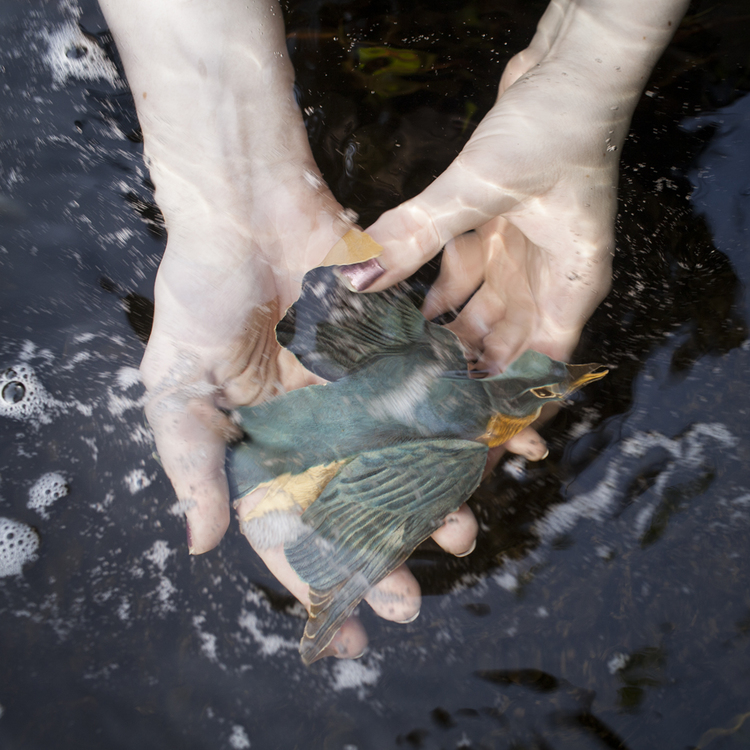
Two nice things: a poem by Colleen McElroy and the fantastical photography of Cig Harvey.

cig_Harvey_TheBluebird

Sometimes the Way It Rains Reminds Me of You
Colleen J. McElroy

these days I speak of myself in the past tense
writing about yesterday knowing tomorrow
is no more than mist crawling toward violet mountains
I think of days when this weather meant you
were not so far away   the light changing
so fast I believe I can see you turning a corner
the rain comes in smelling of pine and moss
a kind of brazen intrusion on the careful seeds of spring
I pay more attention to details these days
saving the most trivial until I sort them for trash
or recycle   a luxury I’ve come to know only recently
you have never been too far from my thoughts
despite the newborn birds and their erratic songs
the way they tilt their heads as if dowsing for the sun
the way they repeat their singular songs
over and over as if wishing for a different outcome

Read that poem aloud. It is so beautiful—both in the lyrical language and the subject matter (I would like my life to smell like rain and pine and moss, please and thank you). Then, go look at these stunning images by Maine photographer Cig Harvey. Although we live in the same state, and have contributed to the same publications, I’ve never worked with Harvey. So far, I’ve just admired her work from a distance. Her photographs are rich with surreal, subtle magic. I dig it.

Hair as straight as sticks, dreams as frail as bog cotton, and eyes as big as plates.

05_eyes_as_big_as_plates_salme

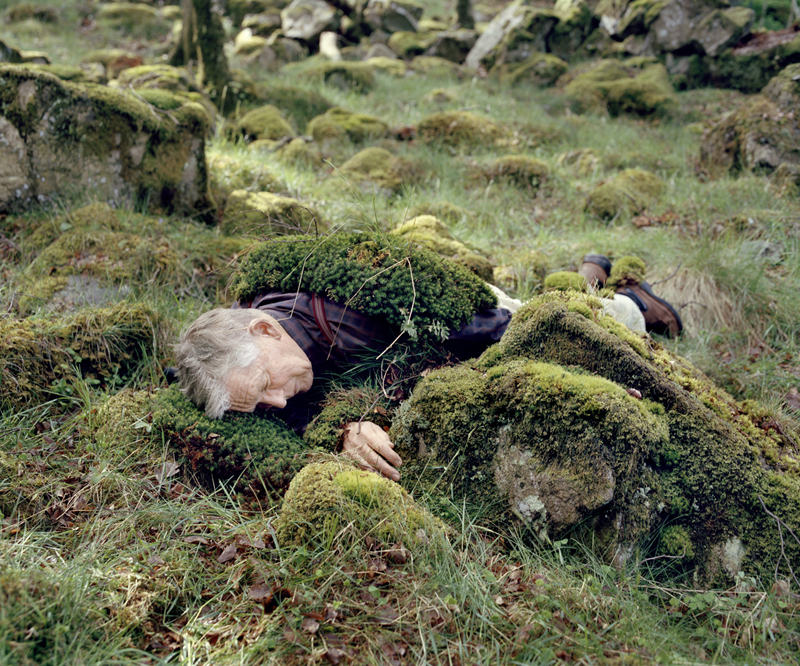
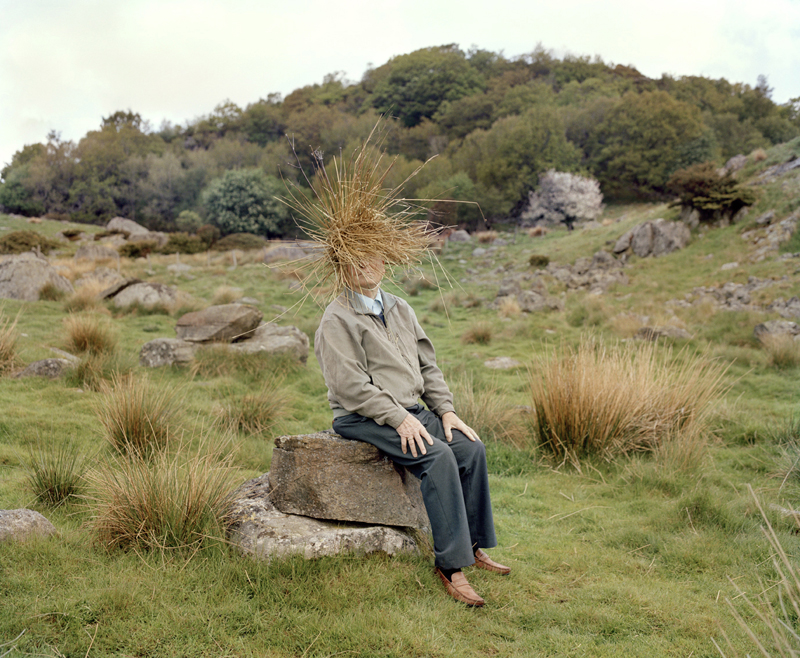
On the internet, this series of photographs has gotten a lot of attention under the headlines “Old Finnish People with Things on Their Heads,” which, while funny, really obscures the purpose of these strange pictures. The series is actually called “Eyes as Big as Plates,” a rather beautiful name, if you ask me. Originally inspired by Scandinavian folklore, the series has grown to cover people living in New York, Japan, and Iceland. It’s the creative work of photographers Karoline Hjorth and Riitta Ikonen and while I do think it’s peculiar and humorous, I also think it’s a wonderful depiction of human dignity, just people being people in their natural environments. Sure, we don’t typically adorn ourselves with windswept sticks and stand atop a cliff… but why not? It’s not like I do anything better with my days.

I might just be in sleepy fiction mode, but each piece feels like a writing prompt to me.

07_eyes_as_big_as_plates_agnes
Ilisia, the goddess of nightmares and daydreams, wonders whether she should claim credit for her most beautiful creation, the nightmare that incubated in an Englishman’s head until it was ready to spring forth, fully formed on Ilisia’s gracious loom, from his tingling fingers. Oh how she loathed the need for a human conduit! “Blow, winds, and crack your cheeks,” she whispers into the air, a fine mist of spit spraying from her cracked lips. “You cataracts and hurricanoes, spout, till you have drenched our teeples, drowned the cocks!” Her voice lowers to a rumble in her throat, barely audible, but the birds listen still: “Nothing will come of nothing.”

eyes_as_big_as_plates_2
Marvin lay down for a little rest in the wood behind his house. He thought he could find his way back easily—if not by sight, then by scent, for his wife Nona had been making Borscht when he left and the savory red smell lingered in the air. Sadly, when he awoke, he could smell no stew and see no house. All had aged, for faeries trick time and men who stray from the hearth are seldom mourned.

eyes_as_big_as_plates_1

“Who are you looking for?” the man asked. “Oh no, Lars is not here. I am Otso and I am a bear.” He took a piece of dried rabbit out of the pocket of his trousers and began to gnaw at it, making the most disgusting noises as he ground and gnashed his old man teeth. For a moment, his headdress slipped, and I’ll tell you this, my friends: He really did look just like Lars.

See more.