Emily Carroll gets under my skin.

Screen Shot 2015-01-14 at 7.58.21 PMI have a raging girl crush on Canadian artist and writer Emily Carroll. She has single-handedly shown me that graphic novels and webcomics aren’t just for boys in love with guns. Sure, her comics are violent, but not in the POW! BANG! way of vintage superheroes and their incompetent nemeses. Carroll’s stories are violent in a slow, creeping way. They are dark and twisted, like the original Grimm’s fairytales (nothing like that sanitized Disney junk).

She writes fables and horror stories, fairytales and mysteries, and illustrates them beautifully. There is a layer of mistiness to each image, a sense of distance, a gray wash that only enhances the shock of crimson that comes later (sometimes it’s blood, but sometimes the horror is something else entirely).
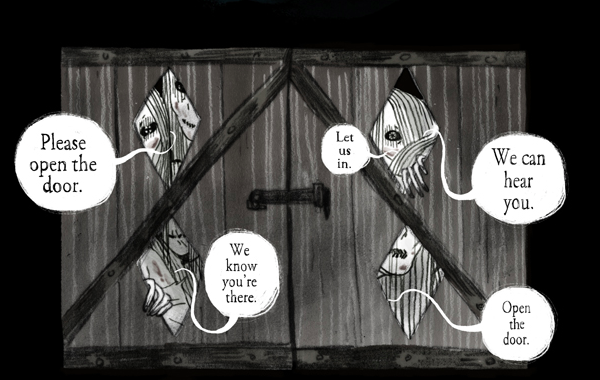
Screen Shot 2015-01-14 at 8.09.41 PMI had my own little Christmas book flood this year (or in Icelandic, Jolabokaflod) and one of the books I received was Through The Woods, a print collection of Carroll’s webcomics and stories. Some of these are available to read online, including “His Face All Red,” a fantastic story of two brothers and a wolf, and “Out of Skin,” which is about a crone who finds herself suffocating in human skin. They’re spooky and wonderful—wholly original fairytales that pay tribute to the history the genre without being beholden to it.

Go read them on her site, or better yet, buy a copy of her book. It’s the kind of heavy book that keeps you coming back to it (I’ve read it twice already). Despite containing relatively few words, it is captivating in a literary sense and in a can’t-look-away-can’t-look-at-it sense. Also, I’ve realized that graphic novels are great because they make me slow way down and pay attention to exactly what I’m looking at. You can’t rush through them. You have to read the pictures, to pause and look at them, to suss out the clues buried within each pen stroke.

A very merry approach to death. 

merry cIn Romania, there is a place called the “merry cemetery” or in Romanian, Cimitirul Vesel  (cimitirul=cemetery; vesel=joyful, jolly). In the place of tombstones with their solid, solemn permanence, the Merry Cemetery uses wooden crosses, made from oak and painted by local artist Stan Ioan Pătraş, who started the tradition in 1935. (Since his death, his apprentices and followers have kept it alive. Now the graveyard has over 900 crosses, all decorated in the same bold style). Each headstone tells the story of the person buried beneath it, but not in the usual “here lies beloved Mary, wife, mother, and churchgoer” format. No, instead of providing brief, impersonal sketches of the departed’s life, these crosses are decorated with irreverent poems that focus on the follies and foibles of the dead, the colorful details that, in a more staid and stoic society, would cause the corpses beneath to roll over in shock.

This is, I think, the most interesting thing about the Merry Cemetery—aside from the folk art paintings and the striking cerulean hues. This is a place where death is allowed to be funny, even joyful. The dead don’t lose their personalities; instead of being placed beneath bland and anonymous pieces of granite, the dead lie below brightly colored tributes to their idiosyncrasies. A critical mother-in-law is remembered in a rhyming epitaph for her sharp words and wit. A known womanizer is immortalized for his favorite vice. (“Ioan Toaderu loved horses,” reads his headstone, “One more thing he loved very much / to sit at a table in a bar / next to someone else’s wife.” I believe it rhymes in Romanian.)

merryc2I’m afraid of too many things, which is perhaps why I love this approach to death. It seems natural and human. Consoling, in that strange way (I think dark humor is comforting, even when it’s a bit terrible and offensive—it takes the sting away from real terrors). The moment I saw images from the Merry Cemetery, I remembered a book I once read about Frida Kahlo that describes the artist’s feelings about death. Obviously, the visuals call to mind Mexico’s Day of the Dead, with its sugar skulls and dancing skeletons, but I think the resemblance goes even deeper than that. According to this book, Kahlo saw her death as a figure that was always close, always waiting for her, a thing that loved her, and wanted to see her home. It was her skeletal shadow. If you look at death like this, like Kahlo did and perhaps some Romanian artists do—death isn’t the enemy. Just a friend that you don’t want to meet right now.

Images via Flickr here & here.

Grimm plus Gorey equals macabre fairytale perfection.

grimmgorey
Edward Gorey once illustrated classic fairytales from The Brothers Grimm, retold in sparse but humorous language by author James Donnelly. How did I not know this?!? What a perfect combination. If I had a kid, I would buy this for them straightaway. rumpelstiltskinIn case you couldn’t tell, the top picture shows Little Red Riding Hood meeting that big, bad wolf in the forest before it runs off to do some mild cross-dressing. The second picture is Rumpelstiltskin, that little gnome-y scoundrel, dancing in the forest and celebrating the victory that will never be his.

Buy the book here.

Moki, teach me how to disappear.

Screen Shot 2015-01-07 at 10.22.37 PMI just spent an hour tracking down the origins of this piece. I first saw the eerily calm, untitled image floating around on Pinterest. It’s by Berlin-based artist Moki, and oh man am I glad I figured that out. Because Moki is amazing. This waterfall sleeper is from the series “How to Disappear,” a name that feels like it was plucked from somewhere inside my ribcage. Her work is amazing—soft, textured, dreamlike. She’s also chosen to remain anonymous, painting under the simple nickname Moki, keeping her real identity hidden. Disappear? She’s already invisible. Screen Shot 2015-01-07 at 10.25.27 PM On her website, she has several other projects, like “Turquoise” and “Caves” and even a series on treehouses. All her work seems to touch on similar themes and swim in that weird place of magical realism. (I know in art it’s called surrealism… but the tone of these images seem closer to a page from a novel—they lack the flatness that so many surrealist images have. They are so layered and human. They tell stories. Damn, even that rock looks human.)  Screen Shot 2015-01-07 at 10.26.54 PMScreen Shot 2015-01-07 at 10.26.41 PMScreen Shot 2015-01-07 at 10.26.21 PMSo lovely. See more here.

Herbal cures for whatever ails you.

Screen Shot 2015-01-05 at 11.59.36 AM
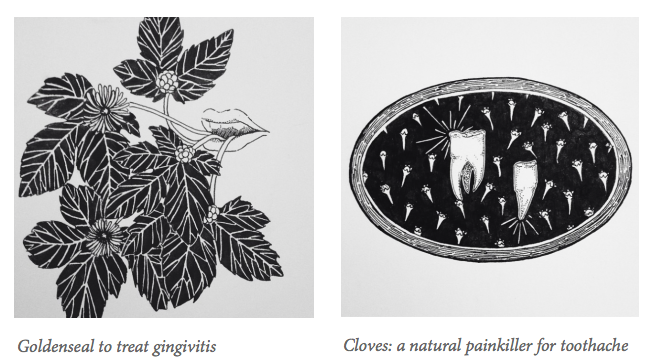
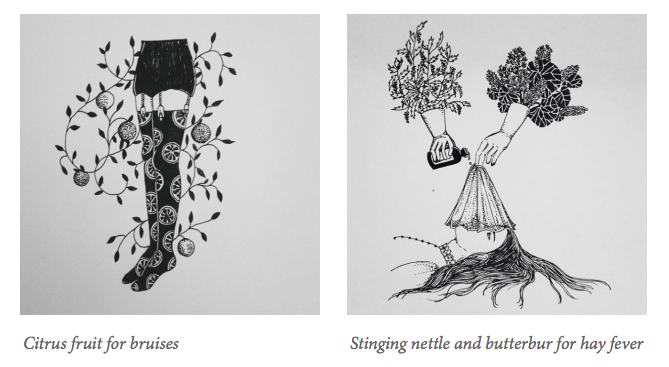
Blogger and artist Catherine of Wolf Eyebrows took to Instagram this summer for a 30 days project in which she sketched medical ailments and their natural remedies. The results are just great—albeit a little bit gross. But I don’t find that off-putting. There is so much humor in each pretty little sketch!

Screen Shot 2015-01-05 at 12.02.59 PM
On a related note, I’m learning how to make herbal tinctures. I’ve dabbled in foraging—though who in Maine hasn’t gone out looking for fiddleheads? It’s practically a rite of spring—but herbal medicine is new to me. I love the idea that we can cure ourselves with leaves and petals and roots rather than pills and needles and plastic. Admittedly, that idea is particularly attractive at the moment, seeing as I don’t have health insurance, but there’s something deeply appealing to this highly independent, mildly prickly lady about being able to fix my damn own body without calling for help.

See the full project here.

The History of Pretty: Ophelia, the girl who just couldn’t catch a break.

Poor Ophelia. Life wasn’t kind to you. And by life, I mean Hamlet—or rather, Shakespeare, because he’s the one who gave you so few lines to speak, so little personality. Faded, lost, mad, drowned. No wonder painters couldn’t stop painting you—who doesn’t love a tragic ingenue? In the words of your brother: “Thought and affliction, passion, hell itself, She turns to favor and to prettiness.

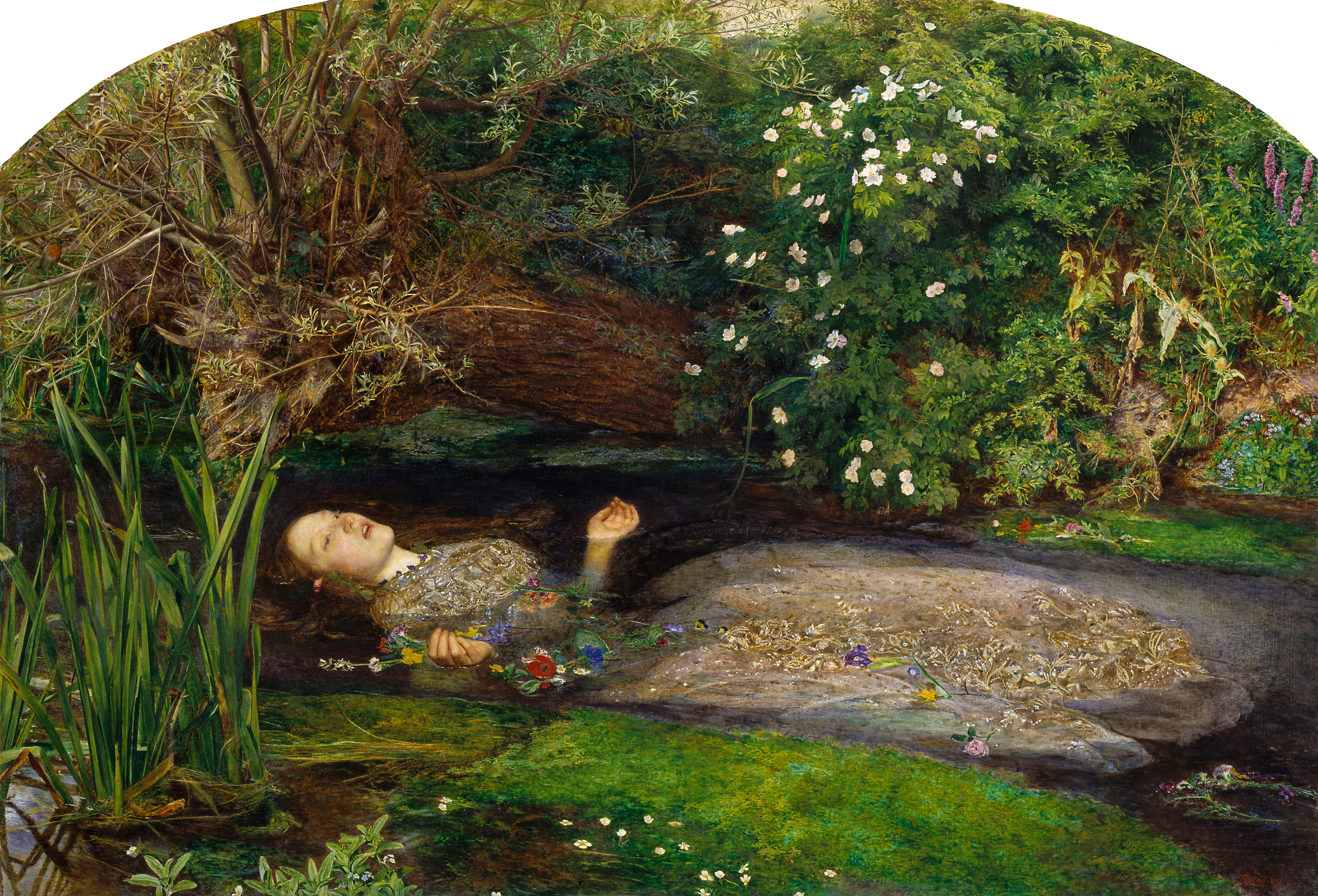
John_Everett_Millais_-_Ophelia_-_Google_Art_ProjectYour youth and beauty made madness appealing and your virginity made it all the more intoxicating. Artists went wild, turning your tragic character into fodder for their romantic paintings. This (above) is perhaps the best known Ophelia image, pained by John Everett Mills in 1852. It even inspired my own flower-bathing experience.

gather-ye-rosebuds-or-ophelia-1908
Gather Ye Rosebuds or Ophelia – John William Waterhouse, 1908.

Here is Ophelia looking alive and rosy, holding some posies. I love the expression on her face here—she looks strong, almost defiant. This painting is titled “Gather Ye Rosebuds or Ophelia,” which references both the famous Robert Herrick poem and Shakespeare’s doomed character for a lit nerd double-hitter.

Screen Shot 2014-12-31 at 1.04.53 PM
Ophelia – Arthur Hughes, 1852

While not as famous as many of the other Ophelia depictions, this painting by Arthur Hughes is my personal favorite. She looks so frail and so childlike. Look at that vibrant, sinister, poisonous green! And the cute little toadstool. I find this piece enchanting and strange in a surprisingly modern way (doesn’t it look like it could be by a contemporary artist?). Also, do you ever wonder why Ophelia is always depicted with flowers? It’s not just because she’s a wilted, fragile symbol of femininity…

Ophelia waterhouse
Ophelia – John William Waterhouse, 1889

Ophelia had relatively few lines in Hamlet, but her madness is marked by gibbering about flowers, herbs, and their meanings. She sings and babbles to her brother Laertes:

“There’s rosemary, that’s for remembrance. Pray you, love, remember. And there is pansies, that’s for thoughts… There’s fennel for you, and columbines.—There’s rue for you, and here’s some for me. We may call it “herb of grace” o’ Sundays.—Oh, you must wear your rue with a difference.—There’s a daisy. I would give you some violets, but they withered all when my father died.”

The Death of Ophelia - Eugene Delacroix, 1843
The Death of Ophelia – Eugene Delacroix, 1843

There are some modern renditions of Ophelia, but she seemed to be most popular during the mid-1800s, which makes perfect sense. This was a time of Romanticism and Impressionism, of experimenting with new forms while reawakening old stories.

Ophelia - Claire Rosen, 2008
Ophelia – Claire Rosen, 2008

The rich visual language of Ophelia creates an instantly recognizable figure. Who else would be swathed in a white dress, floating in water, surrounded by greenery and flowers? Contemporary artists seem to prefer to photograph Ophelia rather than paint her. It’s an easy shoot to set up, and the results are made all the more dramatic by the literary references. (Plus her fate is really tailor-made for modern feminists, since her madness is predicated by a very real virgin/whore dichotomy set up by her father and her lover. Ouch.)

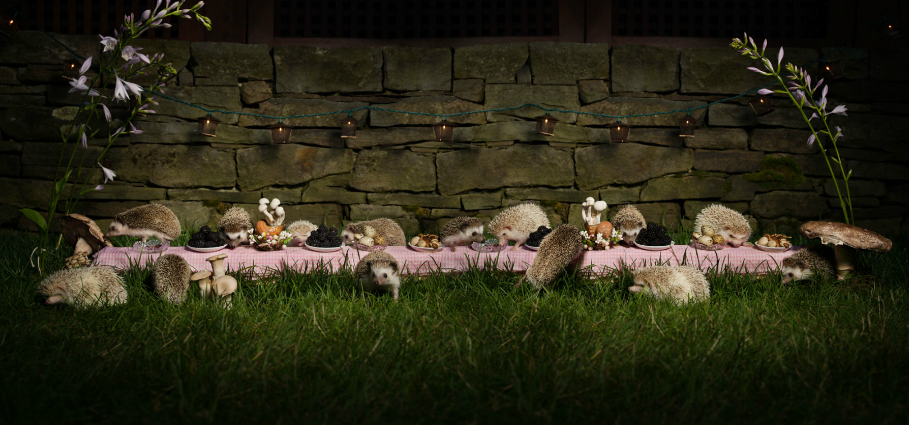
Screen Shot 2014-12-31 at 1.32.44 PMAdmittedly, this last picture has nothing to do with Ophelia, except that it was shot by Claire Rosen (same photographer as the one above) and it is gloriously awesome. Rosen has an entire series of Fantastic Feasts with beasts, as well as a series of fairy tale-inspired images. They’re all lovely. Go take a look.

More in History of Pretty: 
I love Alphonse Mucha
The most beautiful sculpture I have never seen. 

Two Nice Things: Yumi Okita makes textile moths, reminds me of the Limberlost.

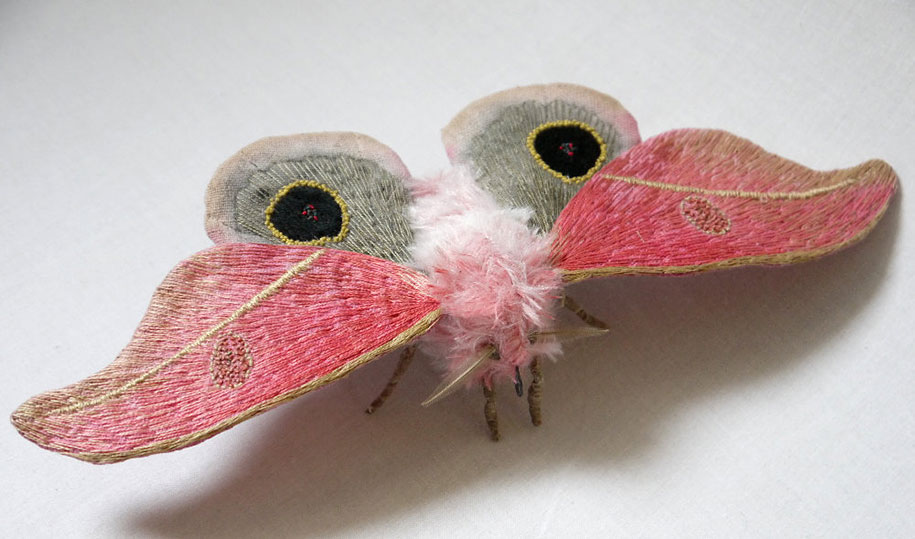
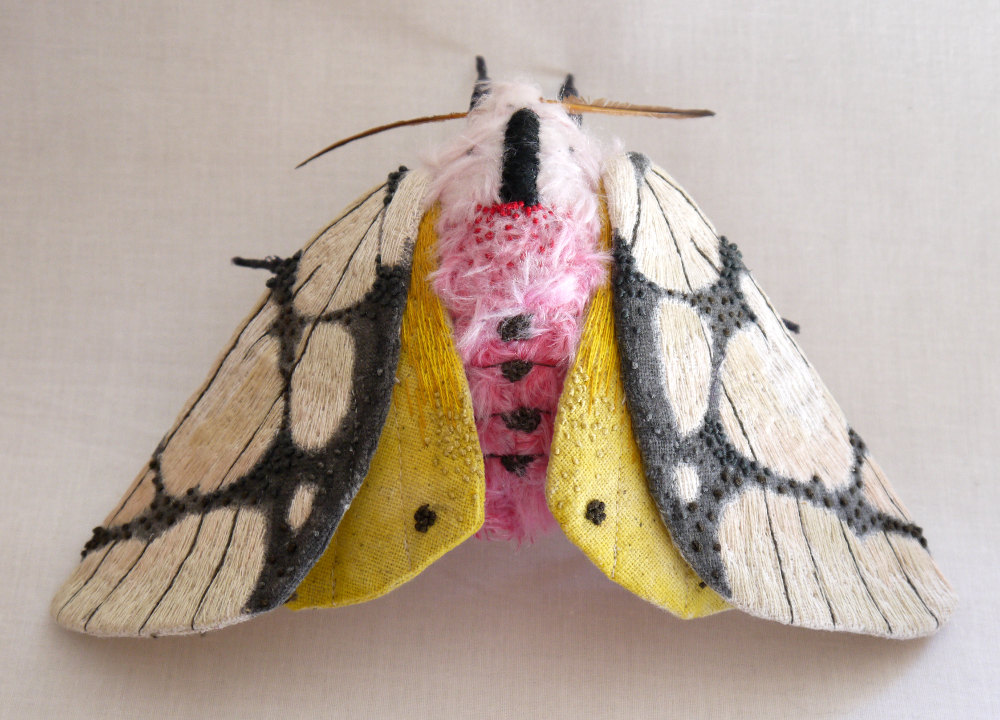
Moths! They’re the redheaded stepchild of the butterfly family (no, that’s not science, but it feels true anyway). They’re ugly and furry and yet, in Yumi Okita’s hands, they’re kind of… cute? Cuddly? Fuzzy and warm? Yumi okita
Not since I read A Girl of the Limberlost (a novel by naturalist Gene Stratton-Porter published in 1909) have I been so taken with moths. The book tells the story of a young Indiana girl named Elnora who sends herself to school with the money she makes selling insect specimens. She goes into the Limberlost swamp—what a wonderful, fantastical name for a real place!—where she finds all manner of strange flora and fauna. yumi
I think Elnora (again, that name!) would love Yumi Okita’s textile moths. She makes these beautiful patterned winged things from yarn and string and fiber. You can’t tell from these pictures, but the moths are actually huge—each wing is about as big as a hand. yumi2

I particularly like these three, but Okita creates insects (and flowers) in all different shapes and sizes. They mimic real life, but they’re infinitely more beautiful than the average brown moth you see dive-bombing a lightbulb. Just look at the patterns! And I’m really loving this particular color scheme right now. Rose and dust and dusty rose and soft browns and warm ivory. See more of her work here.

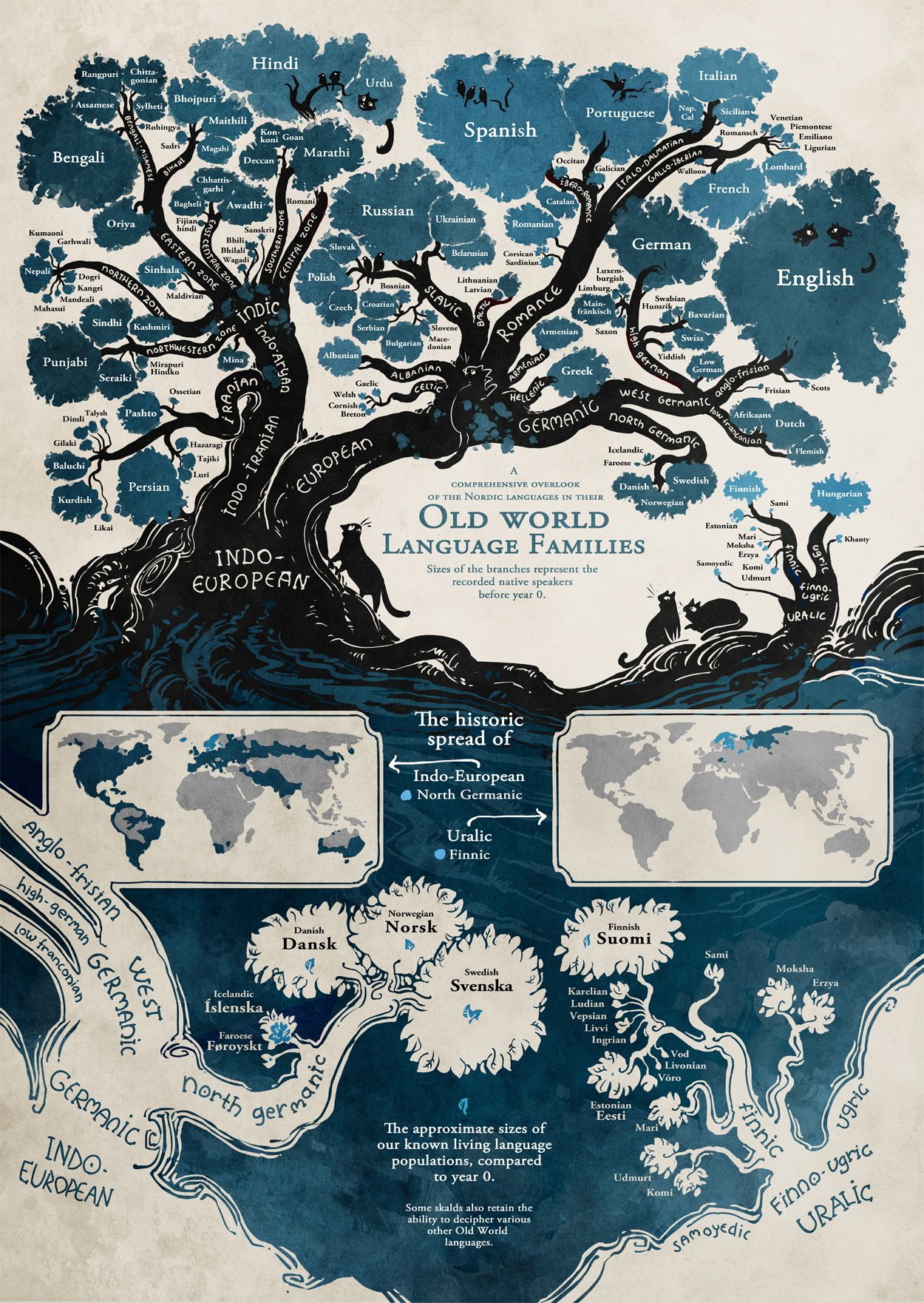
History of words gets visualized in Minna Sundberg’s lovely arboreal chart.

languagetree

Check out this amazing illustration, which shows the growth and spread of “Old World” in a properly old school-lookin’ linguistic family tree. Stunning, isn’t it?

As a side note, Finno-Ugric is the strangest language group! I lived in Hungary for six months and learned so little Hungarian—I remember it took me weeks to properly pronounce köszönöm (thank you) and even then, I still preferred to just say the short version (sounds like “kussie”) for fear of embarrassing myself. It’s such a difficult language, and related to so few other European tongues. I always loved to hear it spoken—to me it always sounded twisty and jagged, yet musical, like a piano played too fast. Oh, Magyar. I miss you.

To be fair, I’m also terrible at languages in general, despite being fascinated (a little in love with, honestly) words and their sounds.

{Via}

Instagram on my wall.

Screen Shot 2014-12-12 at 3.27.34 PMSometimes people email me about products they want me to write about. Usually, to be totally honest, I delete the emails or send them a quick “thanks but that doesn’t fit” note (I’ve been trying to respond to PR pitches more, especially after reading this great piece about gendered work and the public relations business from Jacobin, which made me think twice about clicking delete). But anyway, I was recently contacted by the folks at Instantly Framed, and because I’m an avid instagrammer I decided to try out the app (you can find my Instagram account here… in case you were wondering).

And I’m super glad I did! It took about five seconds to pick a photograph from my phone and order a framed print, which was delivered in two days. While I admire minimalist decor, I’m truthfully a maximalist myself; my apartment is covered in prints and pictures, weird textiles and pointless knickknacks. But I wouldn’t have it any other way (what are walls even for, if not to cover in pretty pictures?!).

Today I hung the above picture on my wall. I took that picture myself (on my iPhone… obviously). It’s the view from the top of Mount Kineo, a mountain that is located on a small island in the middle of Moosehead Lake. Up north, Maine is wild and green, scarcely populated and full of larger-than-life moose that chill out by the water as if they’ve got nothing better to do. (Did you know they have hollow hair, which enables them to swim, despite the fact that they’re big, huge, heavy, actuallykindofscary animals?) I love it up there. I often wish I lived further north, though I know there are few jobs to be had and a lot of economic depression. It’s a hard place to make a living, and though Maine is amazing, it’s still a state with a lot of issues. But I consider myself lucky to live here, and fortunate to have access to so much natural beauty. In the summer, I drive north whenever I can, to camp out at Lily Bay State Park and spend my days soaking in tea-dark lake water.

But I’m getting off topic. This is a cool app. I would never recommend it on my blog if I didn’t really, really like it. So, if you need some new wall art, you should check it out. And if you use the code CIKELLEHER10 you’ll get $10 off your first order (though December 15). Cool, eh?

Today I’m inspired by… Yayoi Kusama’s entire career.

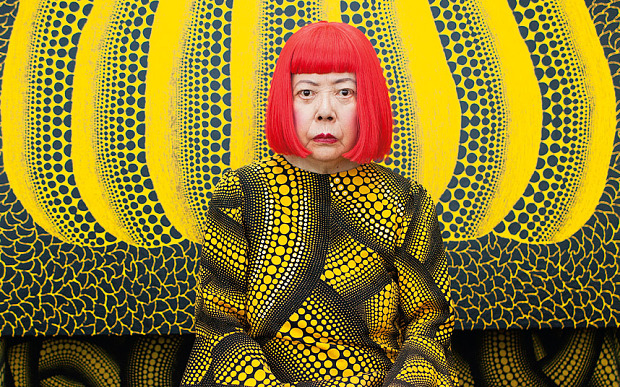
yayoiI’ve professed my love for Yayoi Kusama before, but this playful, colorful art installation in Aix-en-Provence just takes it to the next level. It’s like a scene from a utopian fantasy novel, or an adult Dr. Seuss. A quick google search revealed that this Japanese artist was active in the New York art scene at the same time as Andy Warhol—which makes perfect sense, because nothing quite says POP art to me like colorful dots and infinitely repeating patterns (these trees are kind of like a deconstructed Lichtenstein). Her work has been labeled feminist and minimalist, with strong (and pretty awesome) psychedelic undertones. But what really surprised me is that she’s also the author of multiple novels. She’s 84-years-old and a totally badass lady with more talent in her little finger than most people have in their entire bodies. And just look at her:

Yayoi_Kusama_3018813bI get so wrapped up in stories of young people creating amazing things, but often these “prodigy” narratives make me feel unaccomplished. Reading about established artists with long, varied, and interesting careers is the perfect antidote to that ugly, envious tendency. At 84, she’s still creating wonderful things. Life is (hopefully) long and full of wonder. I still have time.

P.S. Dig this artist? You can check out more of her work at Artsy.net.